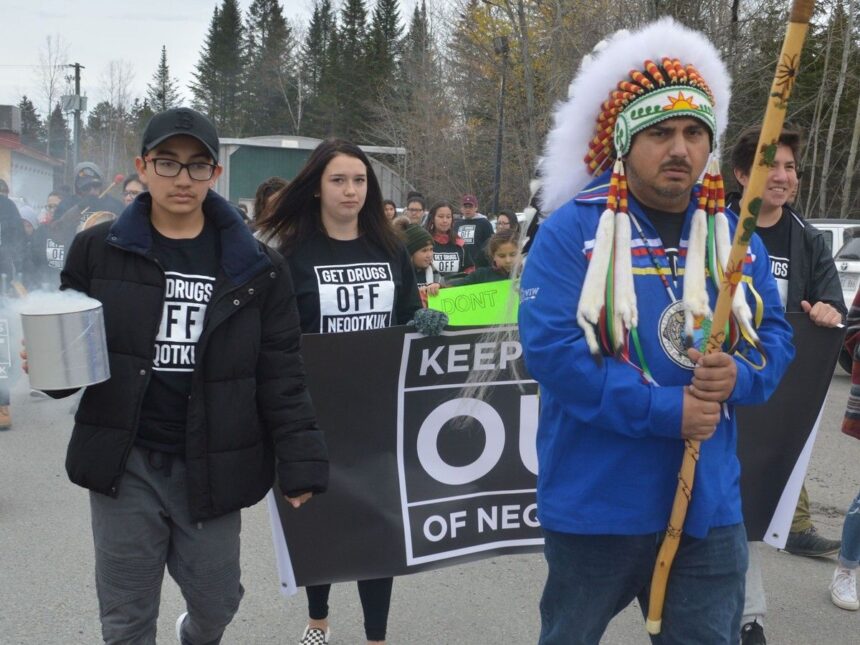
Indigenous chiefs issue press release accusing the government of rushing on the controversial fileAuthor of the article: John Chilibeck • Local Journalism Initiative reporterPublished Nov 05, 2026 • Last updated Nov 05, 2026 • 5 minute readChief Ross Perley of Neqotkuk, or Tobique First Nation, participates in a healing walk in this file photo. The chief says the Holt government hasn’t meaningfully consulted on shale gas. BRUNSWICK NEWS ARCHIVEOne of New Brunswick’s biggest Indigenous groups is throwing cold water on the idea of lifting the moratorium on shale gas development, arguing the Holt government has rushed ahead without proper consultations.THIS CONTENT IS RESERVED FOR SUBSCRIBERSSubscribe now to read the latest news in your city and across Canada.Unlimited online access to articles from across Canada with one account.Get exclusive access to the e-Edition, an electronic replica of the print edition that you can share, download and comment on.Enjoy insights and behind-the-scenes analysis from our award-winning journalists.Support local journalism and the next generation of journalists.SUBSCRIBE TO UNLOCK MORE ARTICLESSubscribe now to read the latest news in your city and across Canada.Unlimited online access to articles from across Canada with one account.Get exclusive access to the e-Edition, an electronic replica of the print edition that you can share, download and comment on.Enjoy insights and behind-the-scenes analysis from our award-winning journalists.Support local journalism and the next generation of journalists.REGISTER / SIGN IN TO UNLOCK MORE ARTICLESCreate an account or sign in to keep reading.Access articles from across Canada with one account.Enjoy additional articles per month.Get email updates from your favourite journalists.THIS ARTICLE IS FREE TO READ REGISTER TO UNLOCK.Create an account or sign in to continue with your reading experience.Access articles from across Canada with one accountShare your thoughts and join the conversation in the commentsEnjoy additional articles per monthGet email updates from your favourite authorsArticle contentThe Wolastoqey Nation in New Brunswick, which represents six St. John River Valley communities, issued a press release on Thursday stating the Liberal government had prioritized its own timelines over “thoughtful consideration and genuine Wolastoqey involvement” on the controversial decision.At issue is whether the provincial government should lift the 12-year moratorium and allow companies to frack for gas again in southern New Brunswick, what the Wolastoqey and the Mi’kmaq consider their traditional territory.Fracking gas could create scores of jobs and millions of dollars in wealth, but there are fears the industry would also contaminate the ground, air and water, and accelerate climate change.Premier Susan Holt announced in late August a five-month review of the moratorium. That means a decision would be made by late January.“We have tried to work with the provincial government in good faith to establish a robust process which protects our Rights and involves our communities,” said Chief Ross Perley of Neqotkuk, or Tobique First Nation, in the release.By signing up you consent to receive the above newsletter from Postmedia Network Inc.Article contentArticle content“The provincial government has left us no choice but to oppose lifting the moratorium on natural gas exploration in New Brunswick. Our communities must be consulted on the scope of the review, environmental impacts and potential economic benefits.”Holt seemed taken aback by the press release. Only about an hour after it had been issued, she told reporters at the legislature she had just called Chief Perley to sort their differences out.“We’re going to continue the dialogue. We’re meeting with the chiefs on Monday of next week as a regular planned meeting of the leadership table. So, we’re going to continue to communicate and work through this together.” Premier Susan Holt says she hasn’t given up on engagement with the Wolastoqey Nation on natural gas development. Photo by John Chilibeck/ Brunswick NewsThe meeting on Monday is a scheduled, private gathering between the premier and 15 chiefs – both Wolastoqey and Mi’kmaq – to discuss natural gas. Holt and her government have tried hard to improve relations with First Nations since coming to office in late 2024, so Thursday’s press release seemed like a setback.Article contentBrunswick News tried to reach Chief Perley on Thursday but didn’t hear back.The release, however, said that his Indigenous organization representing about 10,000 members began negotiations with the Liberal government shortly after the Aug. 26 announcement.“Wolastoqey negotiators remain dissatisfied with the government’s commitments to community-level participation and engagement, overall decision-making timelines and governance structures, and defining what ‘First Nations partnership’ means,” the statement said.A political scientist told Brunswick News on Thursday that Holt should have known better than imposing a five-month deadline.“The chiefs are pushing back on the tight timeline, and the premier wanted to push full steam ahead and just steamroll them,” said Mario Levesque, a professor at Mount Allison University, in an interview.He said she should have learned from the impatience of former Premier David Alward, who wanted to develop the industry and ignored demonstrators in 2013 until protests got out of control. Scores were arrested and RCMP vehicles were torched near Rexton, where the company SwN had been doing exploratory work.Article content“The premier needs to take a step back and say, ‘we’re going to take the time that we need to build those relationships and to also hold the full consultations,’ which means it’s going to take into next summer and next fall before they can complete all of that work, if not a little bit longer.”The academic said although Holt had described herself as being neutral on the issue, it was obvious she wanted to kickstart the industry to generate royalties and tax revenues to help reverse her government’s record, almost $1.7-billion deficit.“She wants to lift a moratorium and declare open season out there and try to get people developing the shale gas fields as soon as possible to try to get revenues for the province,” Levesque said. “But realistically, the province won’t see that for probably five years or 10 years down the line. So, her government will never see a penny from lifting the moratorium. It’ll be governments in the future that would benefit.”The premier told reporters her government was waiting for the Wolastoqey Nation to submit a plan on what their community members want to hear and learn about the energy source.Article contentShe said her government had offered funding to help First Nations hold community meetings, an offer that was taken up by Mi’gmawe’l Tplu’taqnn Inc., the non-profit organization representing the nine Mi’kmaq communities in eastern New Brunswick.The Mi’kmaq, especially members from Elsipogtog First Nation, were instrumental in convincing the Gallant Liberal government in 2014 to impose the moratorium. A shale gas blockade on Route 134 in Rexton came to an end on Oct. 17, 2013, when RCMP moved in to clear out a protest camp. BRUNSWICK NEWS ARCHIVE“Our commitment to working with First Nations and consulting with First Nations, and collaborating through us, this process has not changed,” Holt said. “It remains. It’s very important to us that we do those community consultations and that engagement, and that it be Indigenous-led.”The premier didn’t know how much funding had been offered, nor details of the Mi’kmaq discussions. Brunswick News asked her press secretary for the information.“MTI submitted a proposal in October for Mi’gmaq community engagement on natural gas which includes 2 community engagement sessions in 8 communities. Sessions are being planned for the latter half of November and into December. We expect to have a signed contribution agreement soon,” said spokesperson Mackenzie Pond in an emailed response. Article contentAsked what went wrong with the Wolastoqey chiefs, Holt shrugged.“You have misunderstandings, you have broken telephones, and so that’s why we have a regular schedule of coming together, face to face, to check in, to see what one community is understanding, what a different community is understanding. Each chief has a different situation.”The premier also said the Wolastoqey chiefs might have felt under the gun.“There’s a lot of pressure,” she said. “You know, we’re consulting with First Nations on data centre policies, on mining projects, on natural gas development. There’s a lot of pressure and there’s a lot of workload on a small number of people trying to do all of these things. So that’s partly why we’re offering assistance and support, so that we can continue to do this together.”Asked if she’d be willing to extend the late January cutoff date, Holt wasn’t clearcut.“We’re looking forward to building a consultation plan with the Wolastoqey Nation in New Brunswick and understand what time they need. They haven’t submitted a proposal yet or a timeline to us, and so, we’ve offered that support and financial assistance for that process, and we’re willing to work through it with them.”Article content
First Nations reject Holt’s speedy timeline for shale gas