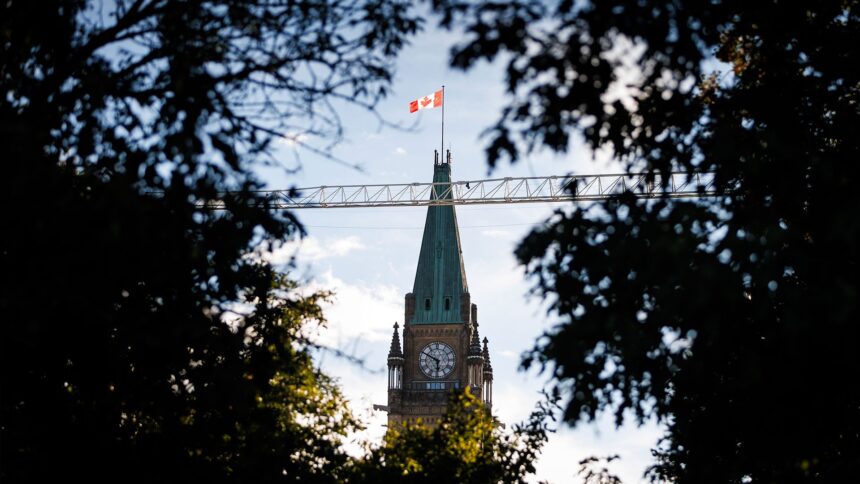
At the UN’s COP31 meeting in Antalya, Türkiye, Canada unveiled its climate commitments to the world. Environment Minister Julie Debrusin told those gathered at the meeting that Canada was committed to its various climate targets. But her comments didn’t go over well with former environment ministers. On X, Catherine McKenna wrote that Dabrusin’s assertion that Canada is committed to its Paris climate targets was “absolutely factually untrue.” “And we’re absolutely committed to our Paris commitments.” This statement is absolutely factually untrue. Canada now has zero chance of meeting its 2030 Paris commitment and has no path to meet net zero by 2050 (and this is before any new oilsands or LNG) https://t.co/SUrvDe0Zpf — Catherine McKenna (@cathmckenna) November 11, 2026 Meanwhile, at that same conference, Indigenous Peoples from around the world mobilized for climate justice through The Woven Project. The project’s co-founder, Eriel Tchekwie Deranger, joined this week’s InFocus between meetings in Türkiye. Deranger has been attending COP meetings since 2009. While she’s seen a gradual increase in Indigenous inclusion, the Indigenous Climate Action founder said there aren’t sufficient mechanisms to hold nations accountable. “We’re not seeing true accountability tracking and monitoring to ensure states are upholding our rights,” Deranger said. “We’re not seeing true integration of our participation and the protection of our rights in things like national climate policies.” While Canada’s environment minister praises the nation’s environmental track record, the Carney government has introduced legislation to fast-track major projects that could impact environmental protections. It’s called Bill C-39 or the Building Canada Strong Act. Althia Raj has been covering it extensively in her column in the Toronto Star. “I would say what’s perhaps most concerning about the way this bill has been presented to Canadians is that the government is not actually being transparent with the public about what the law does,” Raj said on InFocus. Environmental groups are warning that the Carney government’s legislation could compromise extinction protections for at-risk species, including southern resident killer whales in B.C. APTN’s online reporter Emma Honeybun has been following this story, and joins us to share what she’s uncovered. “A lot of the environmental assessments that went on over the last few years do share a lot of concern about, to quote the assessment itself, the irreversible impacts this will have on the environment, both from a marine perspective in the Salish Sea, but also the Fraser River estuary, which is a huge section of wetland where it will be built,” Honeybun said. “But despite these concerns, it’s still on track just because of the massive implications it will have in terms of how it will affect the economy.” Cierra BettensHost/Producer | MontréalCierra is the host and co-producer of the of the weekly APTN News InFocus podcast. She joined APTN in 2024 as a reporter-correspondent in Winnipeg after working in campus and city news. She’s currently completing her Master of Arts in Media Studies at Concordia University in Montréal. Cierra has mixed settler and Red River Métis roots and is a member of the Manitoba Métis Federation. Killer whales and Canada’s changing approach to the environment 01:01:47 Your browser does not support the audio element. Tags: Althia Raj, climate crisis, climate targets, COP31, environment, Environment minister, Liberal government, Ontario, Ottawa, The Woven Project, Turkey Continue Reading
InFocus: Canadas changing approach to the environment


Leave a Comment