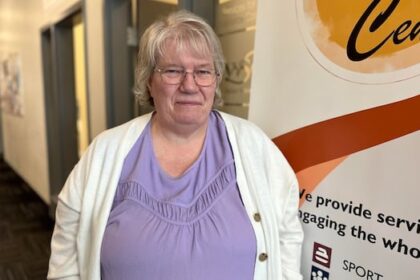
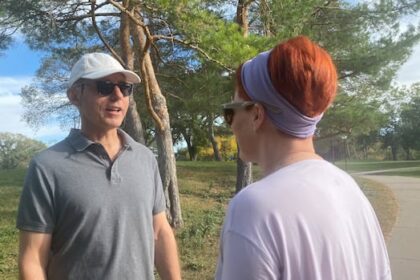
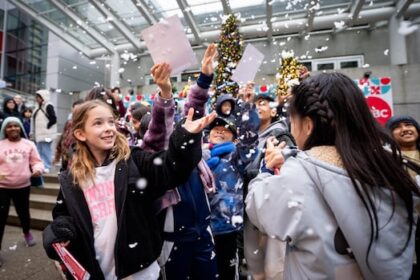
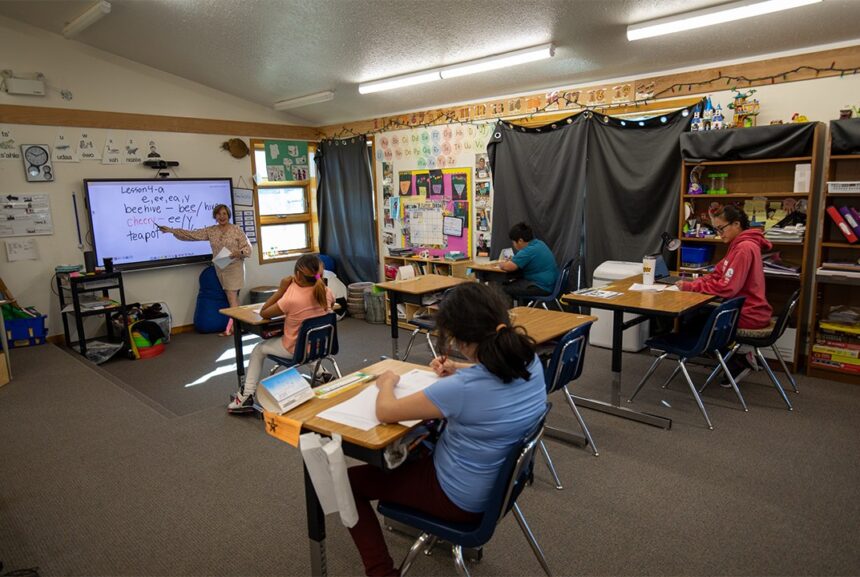
In a remote Dehcho Dene community of fewer than 70 people in the Northwest Territories, education has come full circle. For the first time in recent memory, the educators at Louie Norwegian School are from Jean Marie River itself. Principal Sharon Nahani-Allen and educational assistant Rhonda Grossetete both left home to pursue education and careers before returning to teach the next generation. For the students, it means learning from those who already know their families, their culture and the nuances of the north. “It’s actually really nice because we’re all family,” Grossetete said. “You know which kids are going out on the land, what their families are doing and what the kids are dealing with so they feel safe with us.” Their presence in the classroom comes as schools across the Northwest Territories continue to face challenges recruiting and retaining educators in small communities. While many remote schools rely on teachers from outside the territory, Jean Marie River offers a different model, one rooted in community, language and lived experience. A student works on their garden, a space where education is deeply personalized to meet the needs of each child in a hands on environment. Photo: Charlotte Morritt-Jacobs/APTN A history of keeping children home Education has long been tied to self-determination in Jean Marie River. As APTN News reported in 2020, then-Chief Louis Norwegian refused to send the community’s children to residential school in Fort Simpson in 1951. Instead, he insisted the community would build its own school and find its own teachers. The community built a log schoolhouse that operated until 1980. Today, Louie Norwegian School serves students from Kindergarten through Grade 9. More than seven decades later, local educators say that same spirit continues. The close-knit community of Jean Marie River, home to fewer than 70 people, is at the heart of an educational model built on returning home and leading by example. Photo: Charlotte Morritt-Jacobs/APTN Returning home Nahani-Allen came back to Jean Marie River in August 2025 after earning her teaching degree from Aurora College in Fort Smith N.W.T. A program that was suspended after 2017 leaving aspiring educators with no local pathways to a bachelor’s of education. “I didn’t ever think that I would come back because once we get educated, a lot of people leave the remote communities,” she said. Unlike many educators arriving in remote communities for the first time, she said returning home meant there was no culture shock. “My roots are here,” she said. “The trails are still here. Things that I remember are still here.” Grossetete has been back in the community for six years after attending school there herself. One classroom, many grades With fewer than 10 students, Louie Norwegian School operates as a one-room classroom. Nahani-Allen teaches multiple grade levels simultaneously, adapting lessons for different ages and reading abilities. “It’s proven to be a huge learning curve for me because I have to differentiate so much,” she said. “You can’t teach a 40-minute class consistently and I’ve found that 20-minute concentrated efforts, hands-on learning and giving them plenty of breaks, that’s what works.” She would also like to see more support available for small schools. “I’d like to see more outside experts come in, whether it’s virtually or in person, to give students more opportunities,” she said. “I also think our educational assistants need more training and support.” The classroom makes language classes fun and interactive including a game of mid-day dress up. Photo: Charlotte Morritt-Jacobs Revitalizing Dene Zhatıé For years, the school could not offer Dene Zhatıé, the local dehcho dene language as part of their curriculum. Now students are immersed in their mother tongue from the moment they arrive. “As soon as we come in, she starts speaking Dene so they can hear it every day, all day,” Grossetete said. “They’ve learned a lot because they’re hearing it all the time.” She said students occasionally need explanations in English before repeating phrases in Dene. “But they retain it,” she said. “They remember what they’ve learned because they hear it every day.” Nahani-Allen believes language is central to identity. “Bringing the language back is really key,” she said. “When students hear the language spoken creatively through stories, it makes them excited to learn and it shows them that their language is alive.” Success beyond test scores The territory continues to face significant educational challenges. According to the GNWT’s 2023-24 JK-12 Education System Performance Measures report, the six-year graduation rate for Indigenous students was 45 per cent, compared with 84 per cent for non-Indigenous students. Small communities continue to record the lowest attendance and graduation rates in the territory. But in Jean Marie River, both educators say success is measured differently. The community has also endured repeated flooding and wildfire evacuations in recent years. Grossetete said those experiences remain with many students. “It’s very traumatizing for them, especially with the flood stuff and losing their homes,” she said. “They still bring it up.” She has already seen progress. “They’ve improved a lot in reading, writing and math and [they are] actually really enjoying math this year,” Grossetete said. For Nahani-Allen, success is about helping children become confident in who they are. “Taking kids out on the land, I feel like that’s where the kids shine the best, because they’re in their element,” she said. “Allowing them to decide who they want to be and supporting their growth, for me, that’s the best gift you can give to a child.” Her own connection healing from trauma and withstanding similar events also helps students know they are understood. She also believes education begins at home and wants to see more social supports for families struggling. “I feel like the kids’ real foundation is at home,” she said. “Having good food and nutrition and taking care of them at home and nurturing and loving them, that’s their first point of success.” The entrance to Louie Norwegian School, named for the leader who championed local education over seven decades ago, serving students from Kindergarten to Grade 9. Photo: Charlotte Morritt-Jacobs/APTN Looking ahead Nahani-Allen hopes one day students will be able to complete high school in Jean Marie River instead of leaving the community after Grade 9. “If the community wants to keep their children and have their children graduate in the community, they do need two teachers if that is going to happen,” she said. “But that decision must come from the community.” Ultimately, she hopes today’s students become tomorrow’s leaders. “If they can come back to the community and be the teacher and be the SAO and be the chief and be a leader in their community, that’s really empowering and inspiring for the next generation,” she said. When APTN requested an interview, the Department of Education, Culture and Employment (ECE) declined. In a written statement, the department said education bodies are responsible for the day-to-day operation of schools, including staffing, recruitment and professional learning. ECE said the territorial government supports Indigenous language instruction through its Indigenous Languages Instructor Employment Plan and has increased funding for language and education initiatives over the 2025-26 school year. For both educators, Jean Marie River’s story is about more than teaching. It is about ensuring the next generation grows up seeing leaders who look like them, speak their language and understand where they come from, carrying forward a vision first championed by community leaders more than 70 years ago. Continue Reading
Bringing education home: How Jean Marie River, NWT is rebuilding learning from the inside out

Leave a Comment