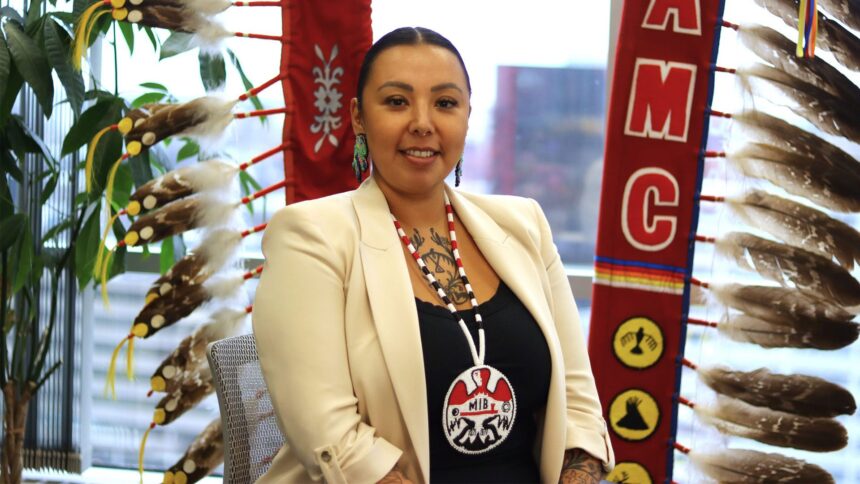
Chiefs from Shamattawa, St. Theresa Point and Sandy Lake First Nations return to court this week to defend landmark Federal Court decisions that recognized Canada’s legal duties to provide safe drinking water and adequate housing on reserve — rulings the Carney government is appealing. “The Government of Canada continues to fight us in Court over one of our most basic rights as human beings,” said Chief Jordna Hill of Shamattawa First Nation. “But Canada knows what it has done to First Nations people is wrong.” “Canada ships bottled water to reserves for their federal employees, while First Nations people living under long-term drinking water advisories are forced to use the contaminated tap water.” The two court cases in question that the Federal Government is appealing are Shamattawa First Nation v. Canada [Water] and St. Theresa Point First Nation v. Canada [Housing]. The federal government is appealing two decisions released in December 2025 by Federal Court Justice Paul Favel. In those decisions, he ruled that Canada owes fiduciary duties, a common law duty of care, and Charter rights to equality, life, liberty and security of the person, and religion in relation to on-reserve drinking water and housing. According to the Assembly of Manitoba Chiefs, Canada continues to argue it has no legally enforceable obligations, attributes difficulties on reserves to First Nations themselves, and is seeking costs against the First Nations. Chief Elvin Flett of St. Theresa Point Anisininew Nation said the federal government created and reinforced the housing crisis. “The federal government put First Nations in an impossible position by creating and reinforcing our housing crisis. We are now living in a permanent state of emergency. We have had no choice but to turn to the courts for our survival,” he said. “While we would have preferred to work with Canada as nation-to-nation partners, Canada has made clear that we will need to enforce our rights through the courts for anything to change.” According to the Assembly of Manitoba’s Chiefs Favel’s water decision ran 59 pages. and rested on roughly 10,000 pages of evidence. The housing decision was 122 pages and drew on about 12,000 pages. The court found that many members live on reserves that are isolated and “lack a viable economic base,” making commercial and residential development impractical. In those circumstances, the judge wrote, Canada can either provide the resources needed or restore First Nations to a position where they can provide for themselves, but it cannot maintain the status quo. The court also rejected Canada’s attempt to ignore the legacy of colonial policies and the Indian Act, which has controlled nearly every aspect of life on reserve. Favel found that a structural deficit has left many First Nations unable to keep up with housing needs since the creation of reserves. Chief Delores Kakegamic of Sandy Lake First Nation said the conditions would be treated as a political crisis anywhere else. “For too long Canada has swept the housing crisis on reserves under the rug. Canada’s politicians and bureaucrats have been satisfied with doing the bare minimum while First Nation members were forced to live in decrepit and overcrowded homes that harm their health, safety, and community,” she said. “If these on-reserve housing conditions existed elsewhere, it would be a political crisis.” Grand Chief Kyra Wilson of the Assembly of Manitoba Chiefs linked the appeals to the language of partnership heard at this week’s First Nations–First Ministers Meeting in Ottawa. “At the First Nations–First Ministers Meeting, Canada spoke of partnership. This week, it will stand in a Winnipeg courtroom and argue it owes First Nations no duty to provide safe drinking water or adequate housing. Canada cannot have it both ways,” Wilson said. “Instead of spending undisclosed sums on lawyers to fight Shamattawa and St. Theresa Point, Canada should honour its Treaty obligations and put that money into water plants and homes.” Read More: Court confirms Canada is liable for water and housing woes The December 2025 decisions by Favel are the first contested rulings to hold that Canada owes First Nations legally enforceable duties to provide reliable access to safe drinking water on reserve and adequate housing on remote reserves. The federal government has tabled the First Nations Clean Water Act while simultaneously arguing in court against it. Until these judgments, the federal government largely treated water and housing on reserve as policy or funding questions rather than judicious legal obligations. If the Federal Courts of Appeal upholds the decisions, First Nations gain a stronger judicial tool to compel action and remedies instead of relying solely on political commitments or discretionary funding programs. The Federal Court of Appeal will hear the cases on Oct. 28 and 29. The case will also be livestreamed. Keelan JacobsOnline Journalist | OttawaKeelan is Anishinaabe from Walpole Island First Nation (Bkejwanong Territory). He graduated with an Honours B.A. In Political Science from the University of Toronto and follows the stories where power, money and public policy meet. Keelan has a strong interest in economics and finance, and is a lifelong hockey and sports fan. Continue Reading
Canada appeals landmark rulings that found it has legal duties on First Nations water and housing



Leave a Comment