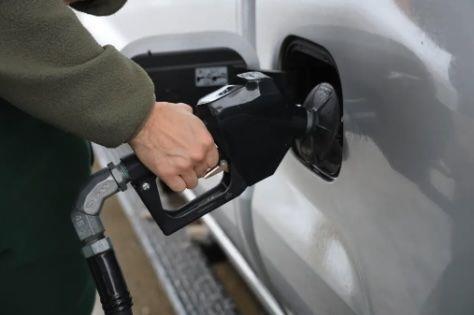
Published 7:53 am Tuesday, November 24, 2026 By William Koblensky Varela Local Journalism Initiative Northern News Service Nunavut’s annual fuel resupply cost the territorial government $292 million in 2026, a considerable jump from last year, when the price tag was $232 million. War between the U.S. and Iran has been driving up diesel prices globally, and diesel accounted for the majority of the higher-priced shipment this year. Those higher costs are why all fuel prices in Nunavut were marked up by 15 cents per litre on Nov. 15. That increase brought the base price of gas for Nunavummiut to $1.47 per litre, heating and vehicle diesel to $1.58 per litre, aviation diesel to $1.89 per litre, and jet fuel and aviation gas to $2.01 per litre. The Government of Nunavut’s Petroleum Products Stabilization Fund buys contracts on fuel throughout the year and then sells them between July and October to acquire the annual fuel resupply for Nunavut’s communities. More fuel was shipped up this year than in the previous two years, and costs have risen considerably on a per-litre basis. The volume of diesel shipped rose to 153 million litres in 2026, an increase from 143 million litres in 2025, and 150 million litres in 2024. This year’s diesel supply works out to $1.25 per litre for the GN, well up from $1.06 in 2025, and $1.11 in 2024. In total, the territorial government spent $192 million on diesel alone, up from $152 million in 2025, and $166 million in 2024. Gasoline cost the GN $1.41 per litre in 2026, compared to $1.19 per litre in 2025, and $1.11 per litre in 2024. Jet-A fuel used for airplanes cost $1.39 per litre to ship up this year, $1.05 per litre in 2025, and $1.11 per litre in 2024. Almost all of Nunavut’s electricity is powered by diesel, while home heating, heavy equipment and municipal vehicles like water trucks also use the fuel. Power generation from diesel has more than doubled in the past two years. Naujaat and Sanikiluaq both have renewable energy projects off the ground and are due to start reducing the load from diesel-powered generators in the near future.
Cost of Nunavut fuel resupply increased by $60 million this year