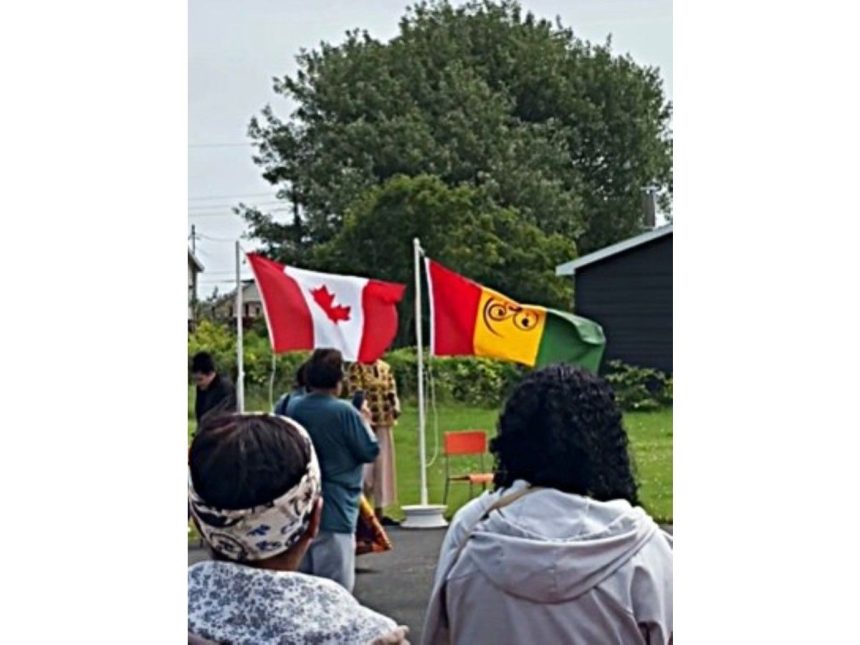
The Emancipation Flag (on the right) was raised on Saturday in Sterling Park in Glace Bay. The Sterling neighbourhood is a historic place of black settlement created by people who arrived in Glace Bay to work in the coal mines in the earliest part of the last century. Saturday was Emancipation Day around the world – a day that celebrates the abolishment of slavery all across the British Empire in 1834. Photo by ROSEMARY GODIN /CAPE BRETON POSTArticle contentEmancipation Day was celebrated both Friday and Saturday in Cape Breton marking 192 years since the enactment of the Slavery Abolition Act.THIS CONTENT IS RESERVED FOR SUBSCRIBERS ONLY.Subscribe now to access this story and more:Unlimited access to the website and appExclusive access to premium content, newsletters and podcastsFull access to the e-Edition app, an electronic replica of the print edition that you can share, download and comment onEnjoy insights and behind-the-scenes analysis from our award-winning journalistsSupport local journalists and the next generation of journalistsSUBSCRIBE TO UNLOCK MORE ARTICLES.Subscribe or sign in to your account to continue your reading experience.Unlimited access to the website and appExclusive access to premium content, newsletters and podcastsFull access to the e-Edition app, an electronic replica of the print edition that you can share, download and comment onEnjoy insights and behind-the-scenes analysis from our award-winning journalistsSupport local journalists and the next generation of journalistsRegister to unlock more articles.Create an account or sign in to continue your reading experience.Access additional stories every monthShare your thoughts and join the conversation in our commenting communityGet email updates from your favourite authorsSign In or Create an AccountorArticle contentThe act freed about 800,000 enslaved people of African descent throughout the British colonies, including Nova Scotia. Article contentArticle contentThe first day of August is known as Emancipation Day around the world. Article contentArticle content“The history of emancipation is not only about the end of slavery. It is also about the generations of African Nova Scotians and people of African descent who built communities, preserved their culture and helped shape the province we know today,” said African Nova Scotian Affairs Minister Twila Grosse. “Emancipation Day gives us an opportunity to recognize that legacy and reflect on what it means for Nova Scotia today.” Article contentA flag raising ceremony took place Friday at city hall in Sydney that included many school children and community leaders, and another ceremony took place Saturday morning at historic Sterling Park in Glace Bay. Article contentCape Breton has historically distinct areas that welcomed groups of Black immigrants who arrived for the job opportunities. They include Whitney Pier and the Sterling neighbourhood of Glace Bay. The Sterling neighborhood is a historic African Nova Scotian community founded by Black coal miners. Article contentWhitney Pier, known as “the Pier” to locals, is an urban neighbourhood on the northeastern boundary of Sydney. Its history was in fishing, farming, and moving coal until a thriving steel plant industry was created in the late 1890s. Many of the Black settlers in Whitney Pier have Afro-Caribbean roots – making it distinguishable from other African Nova Scotian settlements due to its largely Caribbean influence and heritage. Article contentArticle contentBetween 1749 and 1816, approximately 10,000 people of African descent came to Nova Scotia. This included the Black loyalists, refugees from the War of 1812, and indentured servants as well as the Trelawny Maroons and enslaved people of African descent who were brought to Nova Scotia against their will. Once the Slavery Abolition Act 1833 took effect (in 1834), Canada became a free territory for enslaved people of African descent escaping from America. Article contentArticle content‘OPENED DOORS’Article contentOn Saturday, Prime Minister Mark Carney mentioned the Maritimes and Halifax’s Africville in his remarks to the nation about the day. Article content“Slavery existed here – in New France, in the Maritimes, in the households of the powerful,” the Prime Minister said. “While the act marked a turning point, freedom was not granted in a single day. It was taken, held, and defended – by those who fled, by those who were freed and stayed to build, and by generations who came after.Article content“When slavery ended, segregation endured. Africville was razed. Black Canadians were refused service, denied housing, and separated in schools and churches. Yet, despite these barriers, they built lives for themselves and opened doors so many more could follow.
History and legacy: Emancipation Day celebrated over the weekendin CBRM