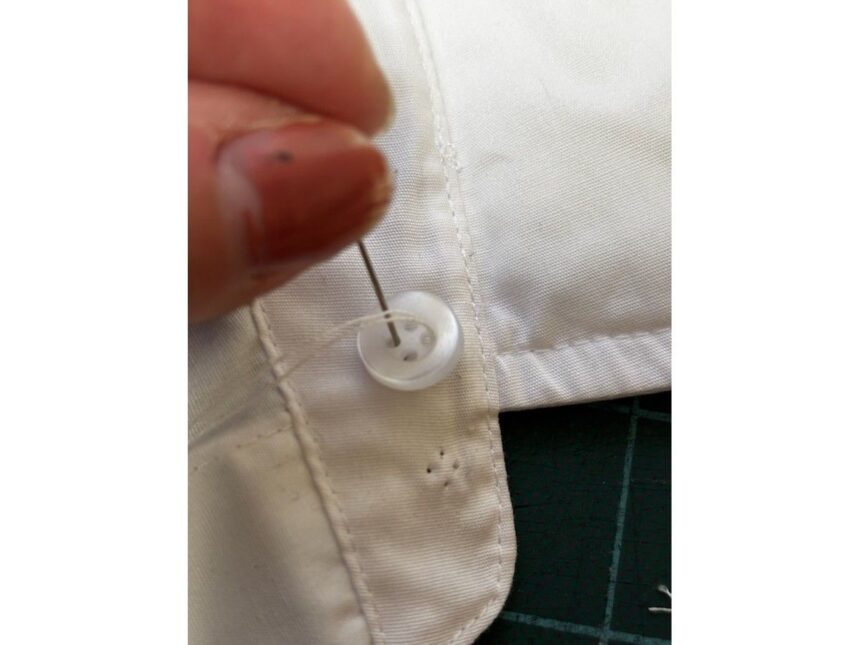
Simple mending tasks are easier than most people believe. ContributedArticle contentIt’s often said that clothes these days are all fast fashion — only meant to last as long as the fashion trend.THIS CONTENT IS RESERVED FOR SUBSCRIBERS ONLY.Subscribe now to access this story and more:Unlimited access to the website and appExclusive access to premium content, newsletters and podcastsFull access to the e-Edition app, an electronic replica of the print edition that you can share, download and comment onEnjoy insights and behind-the-scenes analysis from our award-winning journalistsSupport local journalists and the next generation of journalistsSUBSCRIBE TO UNLOCK MORE ARTICLES.Subscribe or sign in to your account to continue your reading experience.Unlimited access to the website and appExclusive access to premium content, newsletters and podcastsFull access to the e-Edition app, an electronic replica of the print edition that you can share, download and comment onEnjoy insights and behind-the-scenes analysis from our award-winning journalistsSupport local journalists and the next generation of journalistsRegister to unlock more articles.Create an account or sign in to continue your reading experience.Access additional stories every monthShare your thoughts and join the conversation in our commenting communityGet email updates from your favourite authorsSign In or Create an AccountorArticle contentAccording to Katelynn Taylor, fast fashion is a garment mass-produced for a fleeting trend, but it’s more of an ethical issue. Fabrics used in these garments are often sourced from risky, unstable regions of the world where the workers are not paid adequately. For her, it’s the industry behind the product that is the issue, she says.Article contentArticle contentArticle contentTaylor has built a life around clothes, and more specifically sewing, which she started doing at a young age. For the past two years, she has operated Katey’s Alterations and Creations from her home base in Middle Stewiacke, N.S.Article content“My grandma sewed a lot and started to teach me hand sewing when I was young,” she says.Article contentFrom there, she started sewing in a high school home economics class and then went on to study fashion design and techniques at George Brown College in Toronto. Next, she earned a post-graduate certificate in theatrical costume studies.Article contentClothes, says Taylor, are definitely produced differently today than they would have been in previous generations. For example, items are now mass-produced on a variety of machines, taking less time to create than it would have previously.Article content Katelynn Taylor of Katey’s Alterations and Creations says to be creative when repairing and mending clothes. Holes and rips in clothes can be repaired by putting a patch either over or under the location. ContributedArticle contentWhy making clothes fit right is a bigger challenge nowArticle contentWith today’s fashion industry, Taylor says it is often difficult to find clothes that properly fit.Article content“All garments are made to a brand standard, and that is based on a pattern block. These blocks are standardized and most people don’t fit into that standard,” she explains.Article contentArticle contentBecause everyone’s body is different, it means purchased clothing may need to be altered.Article contentArticle contentHemming and adjusting straps are common alterations that are requested as a result, she says. She also gets plenty of requests for repairing ripped jeans and fixing crotch seams.Article content Most clothes come in block industry sizes, and because everyone’s body is different, it means clothes will likely need to be altered. The neckline of this blouse, seen in a before and after image, was altered to better fit the owner. ContributedArticle contentHow learning to mend clothes can save you money and timeArticle contentOnce someone finds an item of clothing they like, they often want to hold onto it for as long as possible. This might mean making some basic alterations to make it fit better, or doing repairs to make it last longer.Article contentAlthough you can donate old clothes, many people toss them into the garbage. However, that just adds to the landfills, and a lot of these items are made with synthetic fibres, which means they may not break down or will take a long time to do so, explains Taylor.Article contentAnd, she points out, if you go out and buy something new, you are back to the beginning again. You would once again be buying a standard brand size that may need to be altered to achieve the desired fit.
How to extend the lifespan of your clothing by learning simple mending techniques