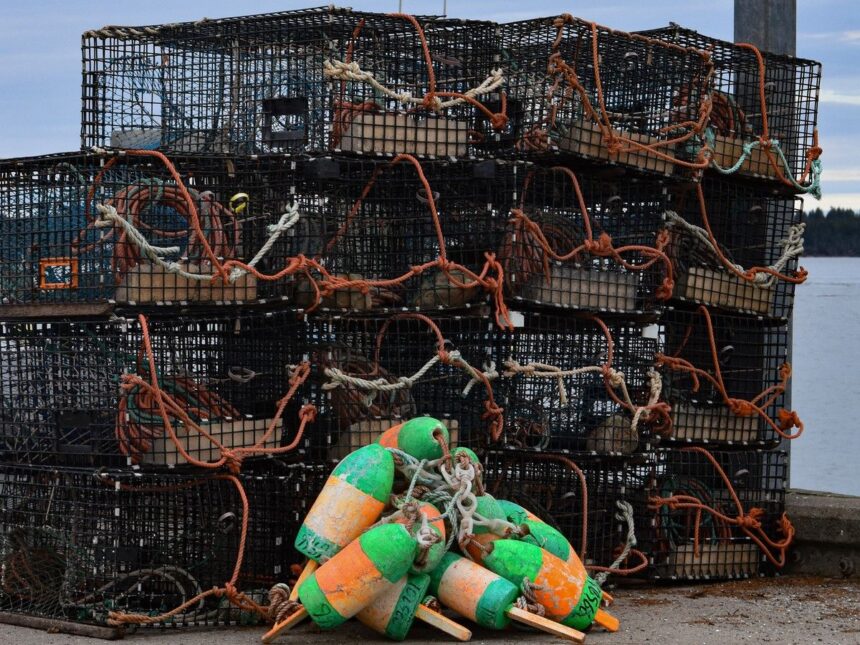
Published Oct 04, 2026 • Last updated 6 hours ago • 4 minute readLobster traps, along with buoys, are piled on the wharf at Lepreau. Photo by Brice McVicar/Brunswick NewsEnforcement officials have seized thousands of pounds of illegally fished lobster in New Brunswick over the last few weeks, and have returned much of it back to the ocean.THIS CONTENT IS RESERVED FOR SUBSCRIBERSSubscribe now to read the latest news in your city and across Canada.Unlimited online access to articles from across Canada with one account.Get exclusive access to the e-Edition, an electronic replica of the print edition that you can share, download and comment on.Enjoy insights and behind-the-scenes analysis from our award-winning journalists.Support local journalism and the next generation of journalists.SUBSCRIBE TO UNLOCK MORE ARTICLESSubscribe now to read the latest news in your city and across Canada.Unlimited online access to articles from across Canada with one account.Get exclusive access to the e-Edition, an electronic replica of the print edition that you can share, download and comment on.Enjoy insights and behind-the-scenes analysis from our award-winning journalists.Support local journalism and the next generation of journalists.REGISTER / SIGN IN TO UNLOCK MORE ARTICLESCreate an account or sign in to keep reading.Access articles from across Canada with one account.Enjoy additional articles per month.Get email updates from your favourite journalists.THIS ARTICLE IS FREE TO READ REGISTER TO UNLOCK.Create an account or sign in to continue with your reading experience.Access articles from across Canada with one accountShare your thoughts and join the conversation in the commentsEnjoy additional articles per monthGet email updates from your favourite authorsArticle contentThey’re efforts that Fisheries and Oceans Canada is now highlighting as it attempts to disrupt what’s believed to be millions of dollars in lobster being illegally sold and purchased in the region.And the department has specifically targeted the illegal purchase and sale of food, social, and ceremonial (FSC) lobsters caught by First Nations fishers.It comes after tensions over Indigenous treaty rights on the water flared up in past years.Ottawa’s efforts are separate from a new move by the Holt government to disrupt a lobster black market it believes is costing millions in lost revenues.Those moves have only included warnings to date.Federal effortsThe federal fisheries department has highlighted three major seizures it made last month that resulted in four arrests.They all deal with First Nations fishers.First Nations with a DFO-issued licence can harvest lobster for FSC purposes, including outside the commercial season. However, FSC lobster cannot be bought or sold as it is contrary to conditions of FSC licences.By signing up you consent to receive the above newsletter from Postmedia Network Inc.Article contentArticle contentA new enforcement tool is being credited for at least one of the arrests.While on patrol in St. Mary’s Bay and the Yarmouth area, fisheries officers began marking lobsters being harvested under FSC licences with a small etching on the tail fin to identify them in attempts to prevent them from entering the commercial market.It led to an arrest in Moncton on Sept. 12 following a surveillance operation that led the officers to a fish buyer, according to DFO.“Upon inspection, fishery officers seized 5,800 pounds of lobster, including 153 lobsters etched in St. Marys Bay, Nova Scotia, as part of an ongoing FSC marking program,” the department stated.“More than 4,000 lobsters were returned live back to the ocean.”On Sept. 10, DFO said a roadside inspection resulted in the arrest of one individual near Lake George, N.B., where officers seized a van the individual was driving, as well as 3,186 pounds of lobster. The seized lobsters were returned live back to the ocean.Article contentAnd on Sept. 9, fishery officers seized about 3,000 pounds of lobster at a fish processing facility in the Gaspé Peninsula during an inspection.Two individuals were arrested and the live lobsters were released back to the ocean.DFO has confirmed that in all three incidents, the lobster was harvested from the Maritime provinces, although declining to provide further information, citing the matters remain under investigation.They’re part of broader enforcement efforts.Further details provided to Brunswick News show fisheries officers in New Brunswick in September inspected 16 holding and processing facilities and 513 lobster traps, seizing 84 traps, while also seizing and releasing 13,139 lobsters live back to the ocean.It then provided additional data on specific lobster fishing areas in southwest New Brunswick.From March 1 to August 31, 2026, fisheries officers in southwest New Brunswick inspected five holding and processing facilities and 2,659 lobster traps, while seizing 339 and releasing their catch back into the water.Article contentThey’re waters that local fishers have complained, as recently as last year, were absent of federal enforcement, while worrying of overfishing and the safety of fishers, fearing the potential for looming confrontations on the water.Officials haven’t drawn a direct line to new enforcement activities.DFO notes they’re numbers that are comparable to last March through September 2025, when fisheries officers in southwest New Brunswick inspected just nine holding and processing facilities, but inspected 4,378 lobster traps, while seizing 1,039 of them.That said, they do say they have informed First Nations that are currently undertaking FSC fishing activity about the marking initiative and its role in protecting the FSC fishery and conserving lobster stocks.Lobster buyers and processors have also been informed that it’s an illegal practice.New Brunswick effortsIt’s similar to a crackdown the Holt government sank money into, believing it was losing millions in annual tax revenue to an illicit fishery.Article contentThe Holt Liberals announced in its last budget $667,000 to create a five-member unit tasked with conducting investigations on land in support of Fisheries and Oceans Canada.It came shortly after Nova Scotia’s government announced the creation of a similar unit after contracting a forensic accounting firm to audit records of licensed buyers and processors to “assess potential wrongdoing.”The Holt government has estimated it could be losing between $5 million and $7 million in annual tax revenue.That’s based on an estimated $32 million of unreported lobster catch.Nova Scotia has suggested that as much as 30 per cent of all lobster caught in Atlantic Canada could be unreported, representing for that province up to $400 million in “unrealized taxable income.”In a statement, the Holt government said that the DFO seizures aren’t its doing, but that conservation officers have undertaken their own efforts.While DFO has jurisdiction over fish harvesters, the province is responsible for buyers.Article contentWhat’s called the provincial government’s inspections and enforcement branch has focused specifically on buyers “to ensure they are licensed and that buys are properly recorded,” said spokesperson Paul Bradley.“The first year of operation has largely focused on education and intelligence gathering,” he said, while noting that includes “regular blitzes to increase voluntary compliance at the wharf.”Since April, 314 wharf visits have been completed at 38 different wharfs across the province, Bradley said, including 429 fish buyer inspections.That said, it’s yet to level a single fine, instead noting that 14 warnings were issued for regulatory non-compliance.Bradley said monitoring and inspections are expected to continue until the end of fiscal year where lobster fishing is open.Article content
Illegal lobster crackdown leads to arrests, catches returned to ocean