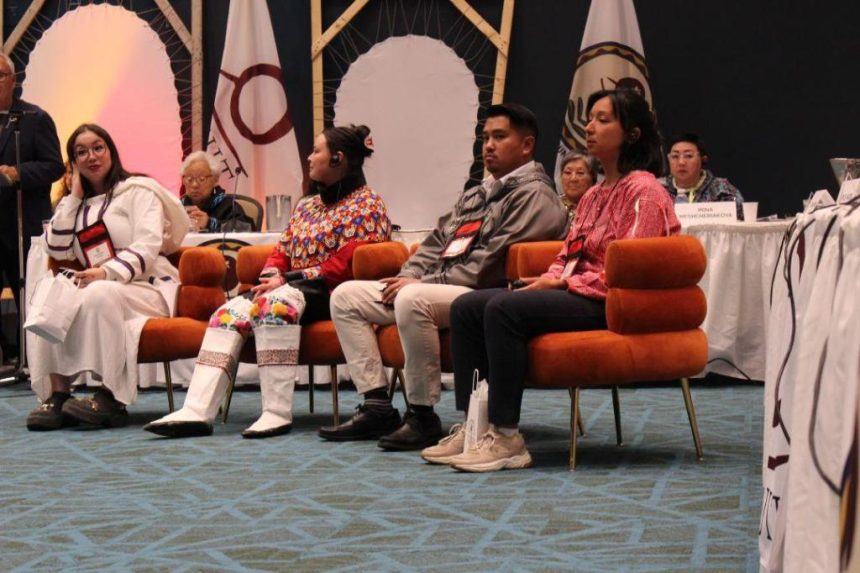
Published 9:18 am Wednesday, August 5, 2026 By William Koblensky Varela Local Journalism Initiative Northern News Services The severe state of mental health issues among youth in the North isn’t a shock to anyone anymore, says 22-year-old Gwen Natsiq. Representing Canada as a youth delegate at the Inuit Circumpolar Council’s general assembly in Iqaluit, Natsiq spoke about how she’s been personally affected by Nunavut’s high rate of suicide. “In the past five years alone, I have lost around eight people to suicide,” she said. There are generally 25 to 37 suicides in Nunavut each year, giving the territory of 40,000 people by far the highest suicide rate in the country, data from the Nunavut Coroner’s Office shows. “This is a level of loss that many people living in the south of Canada may never experience in their lifetime. Yet, for many Inuit youth, it has become a heartbreaking reality,” Natsiq said. More than half of suicides in Nunavut are from youth under age 29, and the vast majority are boys and men. Youth delegates representing Chukotka (Russia), Alaska, Greenland, and Canada presented their communities’ biggest issues to the Inuit Circumpolar Council on July 24 at the Aqsarniit Hotel. Natsiq, originally from Iqaluit, said training youth on how to help each other has been suggested to her by the advocacy organizations she works with. “For example, like peer-to-peer support training in the smaller communities, a lot of youth don’t want to communicate to somebody that they don’t know. Training youth how to help each other and support each other would be very beneficial,” Natsiq said. Specialized healthcare services are often thousands of kilometres away from the Inuit youth who need them the most, she told the Inuit Circumpolar Council’s executive committee. Natsiq said she wants youth experiencing a mental health crisis to know that there is help. “I just want to say, stay sticking in there. I know it’s really hard — and it’s really hard to keep pushing. But you have people who support you, who are there for you. Nunavut is very supporting,” she said. The Inuit Circumpolar Council is a place where Inuit can come together, according to Natsiq. She would like to see more youth get involved. “This is a part of our future. This is the spaces that you need to be a part of to make sure that our future is protected and is following the way that we want it to be in Inuit way of living,” Natsiq said.
Ive lost about eight people to suicide youth delegate tells Inuit Circumpolar Council