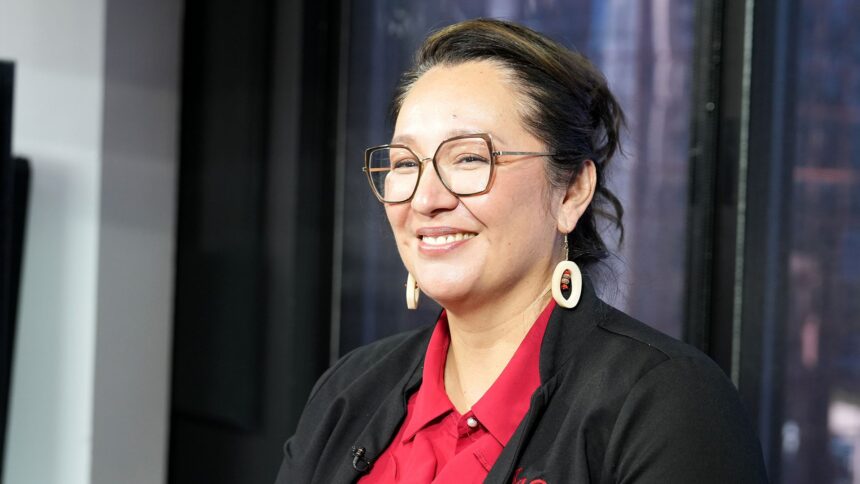
Over the past year and a half, Mandy Gull-Masty says a lot of people have asked, “Why is it that you chose to become the Indian agent?” In May 2025, Gull-Masty, the first ever woman to be elected as the grand chief of the Grand Council of the Crees (Eeyou Istchee), became the first ever Indigenous person to head up Indigenous Services Canada (ISC). The minister says she wants to support the vision of First Nations and “give them the tools they need so that they can take the space of determining how they want services delivered and ultimately doing the work of delivering those services, themselves.” Gull-Masty admits the job comes with “a lot of balancing, a lot of stress, a lot of moments of quiet thought and deep reflection” and that she is “trying to maintain who she is.” Gull-Masty has a number of high profile issues on her plate, including the reintroduction of the First Nations Clean Water Act. Another controversial piece of legislation is Bill S-2. The government of Prime Minister Mark Carney has been accused of stalling on ending the second-generation cut-off. Consultation on Bill S-2 wrapped up in July. While many in leadership have called for Parliament to pass the legislation, Gull-Masty says she’s trying to reflection everyone’s voice. “It is very clear that while yes, while there are some Nations that want to pursue a one-parent rule, the consultations also demonstrated that there are Nations out there that feel very strongly that they need to be the ones that determine the criteria for what it means to be a citizen of their Nation,” says Gull-Masty on the season premiere of Face to Face. “I have the unique challenge as the minister to ensure that while I’m trying to create the pathway for those Nations that want to have a one parent rule, I’m also looking to create a pathway for those who don’t,” says Gull-Masty. Reforming the First Nations child welfare system is also a huge challenge on the minister’s plate. Indigenous Services Canada Minister Mandy Gull Masty at a news conference on Parliament Hill to announce that money from the federal government to First Nation communities in Ontario for their child welfare systems will start to flow on May 29. Photo: Alison Seymour/APTN. Next February will mark the 20th anniversary of the original complaint filed with the Canadian Human Rights Commission by the First Nations Child and Family Caring Society and the Assembly of First Nations (AFN) alleging discrimination in the on reserve child welfare system. A decade ago, the Canadian Human Rights Tribunal (CHRT) ruled First Nations children were being discriminated against. The AFN and federal government previously agreed to a $47.8 billion dollar deal but that was rejected by a majority of chiefs at an assembly in 2024. Chiefs in Ontario negotiated a separate, $8-billion deal with Ottawa, which was approved by the CHRT in March. Since that time, there has been a lot of legal wrangling before the CHRT, some of it over the loss of another commissioner. Gull-Masty says people need to understand that Canada is looking for clarification on rulings and not “looking to push back” on rulings. The minister believes the previous approach of trying to find one path forward for all First Nations, such as the First Nations-led and designed Loving Justice Plan, may not be the way to go. “I’m also trying to be respectful of those communities that want to have the opportunity to seek what was put forward in other plans that are presented by the Caring Society,” says Gull-Masty. “There’s good work there, there’s a lot of research that has been done there. We have referenced it. But ultimately, I really think that the regionalized approach and creating space for Nations themselves to determine what it is they want to do to support their youngest, most vulnerable members is one that is having traction and is one where there is a lot of conversations moving forward and is one where I’m seeing decisions that are leading to support of regionalized agreements,” says Gull-Masty. Another issue that has been at the forefront in recent months that Gull-Masty believes needs a more nuanced approach, is criminalizing residential school denialism. Many First Nations leaders expressed their disappointment when the Canadian Senate voted down an amendment in June that would have rendered residential school denialism a punishable crime. In the lead up to this year’s National Day for Truth and Reconciliation, white nationalists marched near the site of the Kamloops Residential School to hold up a sign that read “Got Bones.” An online political commentary website was also selling orange shirts with the faces of children on them and various slogans like “Still No Proof.” The Liberal Indigenous Caucus, that includes Gull-Masty, released a statement about the shirts stating they were “appalled by the residential school denialism campaign being pushed online.” However, the minister is not certain that criminalization is the way to go. “There are some survivors who may want to take a very narrow position in how to respond. The majority of survivors and the ones who have had an incredible impact on me, spoke to me about this is the work we have to do to heal and we have to ensure that everybody knows what that means,” says Gull-Masty. “I’m maybe a little more open in terms of what we want to offer. I think that restorative justice is a place that I come from, that I believe in. We want to do the work of helping people understand why this is something that is inappropriate, it is vile, but we also want to give them the tools that in changing their mindset, in changing their understanding of history, they have a place to go to, next.” Continue Reading
Mandy Gull-Mastys balancing act as Indigenous Services minister


Leave a Comment