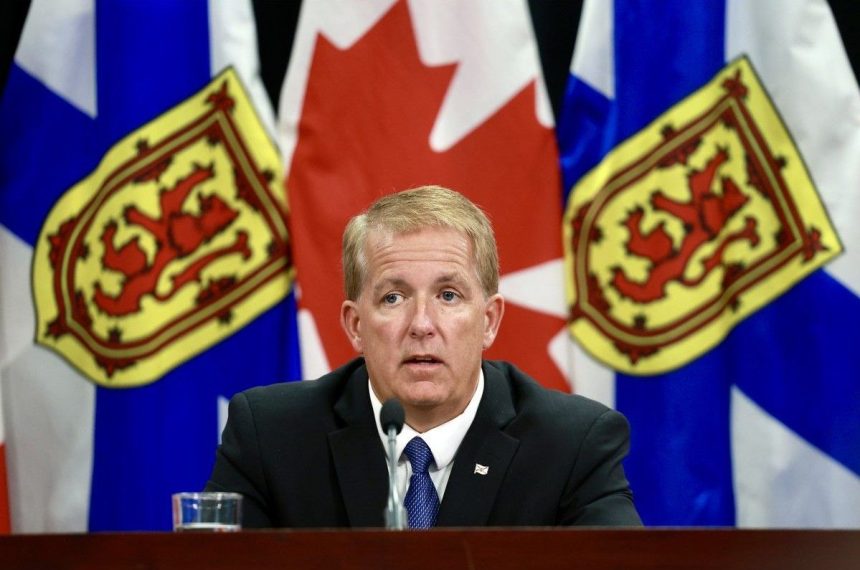
Attorney General and Minister of Justice Scott Armstrong announces a public safety investment in response to findings from Nova Scotia’s comprehensive policing review in Halifax on Wednesday. Photo by Tim Krochak /The Chronicle HeraldArticle contentThe Nova Scotia government is making changes to how municipalities are billed for RCMP services following a policing review, as well as boosting the number of officers in some communities.THIS CONTENT IS RESERVED FOR SUBSCRIBERS ONLY.Subscribe now to access this story and more:Unlimited access to the website and appExclusive access to premium content, newsletters and podcastsFull access to the e-Edition app, an electronic replica of the print edition that you can share, download and comment onEnjoy insights and behind-the-scenes analysis from our award-winning journalistsSupport local journalists and the next generation of journalistsSUBSCRIBE TO UNLOCK MORE ARTICLES.Subscribe or sign in to your account to continue your reading experience.Unlimited access to the website and appExclusive access to premium content, newsletters and podcastsFull access to the e-Edition app, an electronic replica of the print edition that you can share, download and comment onEnjoy insights and behind-the-scenes analysis from our award-winning journalistsSupport local journalists and the next generation of journalistsRegister to unlock more articles.Create an account or sign in to continue your reading experience.Access additional stories every monthShare your thoughts and join the conversation in our commenting communityGet email updates from your favourite authorsSign In or Create an AccountorArticle contentThe current per-officer payment model is being replaced because the government says it has played a part in creating unequal police services across Nova Scotia.Article contentArticle contentA total of 25 additional RCMP officers will be stationed across the province based on where the review identified immediate need. Fourteen of the positions have already been filled while the remaining 11 are in the process of being staffed.Article contentArticle contentAccording to a technical briefing Wednesday, the new model will apply to the 34 municipalities currently policed by the RCMP under the provincial policing service agreement (PPSA), with the change going into effect Oct. 1. The changes will also be retroactively applied to April 1, covering the 2026-27 fiscal year.Article contentWith this, the province will be putting an additional $16 million toward policing in 2026-27 and $18 million annually going forward after that.Article contentAccording to the briefing, there will be no increases in costs this fiscal year for municipalities; instead, most would see costs reduced.Article content“This is not about taking resources away from one community to support another,” Justice Minister Scott Armstrong said Wednesday.Article content“It’s about building a stronger foundation across the province. ”Article contentHow governments paid for the RCMP beforeArticle contentUnder the PPSA, the federal government covers 30 per cent of RCMP policing costs, with the remaining 70 per cent being the responsibility of provinces and municipalities.Article contentArticle contentPreviously, municipal bills have mainly been calculated based on the number of detachment officers assigned to a community. For each officer, the municipality would be charged for all of the related costs, including salary, benefits, and fuel.Article content“A strict per officer model is not working anymore,” Charcy Marchand, director of public safety and policing with the province, said Wednesday.Article contentThe province said the system caused inequalities in police services across the country, especially rural areas with larger geographic areas and low tax revenue where police resources could be limited as a result of costs.Article content“If you’re talking a small rural constituency or a small rural municipality that has a huge geography, but a really small population, that model just didn’t fit,” Armstrong said. “I wasn’t convinced that you could adequately support and keep people safe. ”Article contentThe province did not share a breakdown of how each municipality will be impacted by the changes, saying those details will be communicated to municipalities later Wednesday.
Nova Scotia overhauls how municipalities pay for RCMP policing, promising lower bills