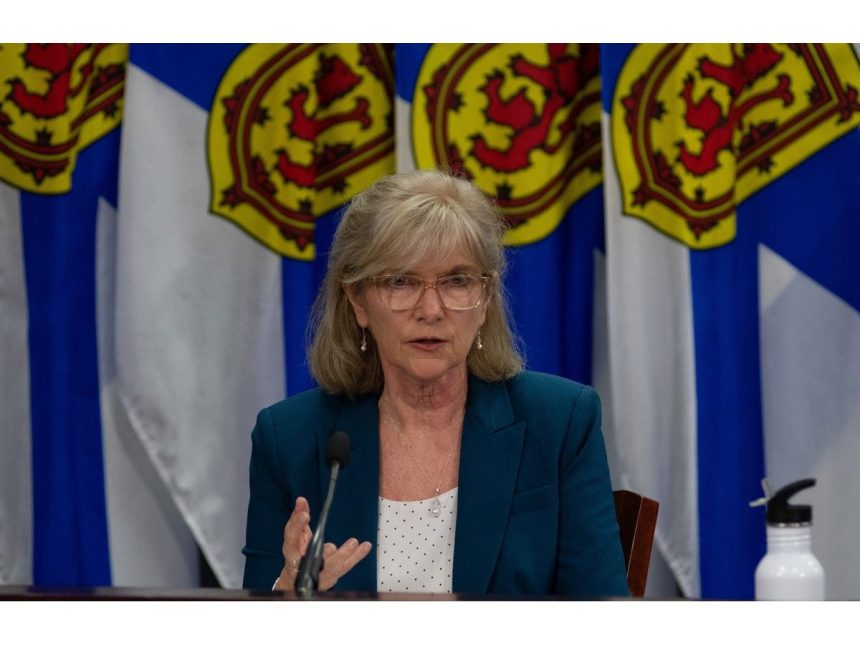
Auditor general Kim Adair answers questions from reporters in Halifax in May 2024. She said Nova Scotia was not doing enough to ensure the health and well-being of children in its care. Photo by Ryan Taplin /The Chronicle HeraldArticle contentNova Scotia’s child welfare system is failing the most basic test: children removed from unsafe or unstable homes are not always safer once they enter government care.THIS CONTENT IS RESERVED FOR SUBSCRIBERS ONLY.Subscribe now to access this story and more:Unlimited access to the website and appExclusive access to premium content, newsletters and podcastsFull access to the e-Edition app, an electronic replica of the print edition that you can share, download and comment onEnjoy insights and behind-the-scenes analysis from our award-winning journalistsSupport local journalists and the next generation of journalistsSUBSCRIBE TO UNLOCK MORE ARTICLES.Subscribe or sign in to your account to continue your reading experience.Unlimited access to the website and appExclusive access to premium content, newsletters and podcastsFull access to the e-Edition app, an electronic replica of the print edition that you can share, download and comment onEnjoy insights and behind-the-scenes analysis from our award-winning journalistsSupport local journalists and the next generation of journalistsRegister to unlock more articles.Create an account or sign in to continue your reading experience.Access additional stories every monthShare your thoughts and join the conversation in our commenting communityGet email updates from your favourite authorsSign In or Create an AccountorArticle contentWithout a functioning child and youth advocate, that goes on without much scrutiny.Article contentArticle contentThe auditor general’s May 2024 investigation into children placed in child and youth care homes and temporary emergency arrangements exposed a disturbing pattern of institutional neglect.Article contentArticle contentBetween 2021 and 2023, 271 children were placed in child and youth care homes, at a cost of roughly $40 million annually.Article contentAnother 227 were placed in temporary emergency arrangements. These arrangements are supposed to be temporary — normally no more than four days. Yet the average stay had grown to more than eight months.Article contentWhat was intended as an emergency measure was anything but. It had evolved into a poorly regulated parallel child welfare stream operating largely outside the safeguards designed for children in care.Article contentThe most troubling finding was not simply the shortage of placements but the weakness of provincial oversight. Temporary emergency providers are not licensed or inspected like child and youth care homes. Contracts with third-party providers lacked meaningful performance standards and staff-qualification requirements.Article contentThe department could not explain why particular children were placed in particular homes. Plans of care were frequently missing, late or outdated. Social workers failed to meet required contact standards in almost half the files examined; in one case, a child went more than three months without contact.Article contentArticle contentEven more alarming, more than 1,900 critical incidents and serious occurrences were reported in child and youth care homes during the audit period, yet the department did not systematically analyze them for causes, trends or patterns. A government responsible for vulnerable children was effectively collecting warning signals without examining what they meant.Article contentArticle contentChild protection services, the auditor general found, was reactive rather than preventative — scrambling to find foster or group home placements instead of focusing on prevention.Article contentAlec Stratford, then executive director of the Nova Scotia College of Social Workers, identified part of the reason in March 2026. The province substantially amended the Child and Family Services Act, expanding the definition of children requiring protection, extending services to those aged 16 to 19 and tightening court timelines.Article contentThose changes were intended to intervene earlier and keep children safely with their families. Yet frontline social workers and community organizations warned that the reforms would increase caseloads and demand without ensuring that the workforce and community infrastructure were ready.
Paul W. Bennett: The plight of children in care in Nova Scotia