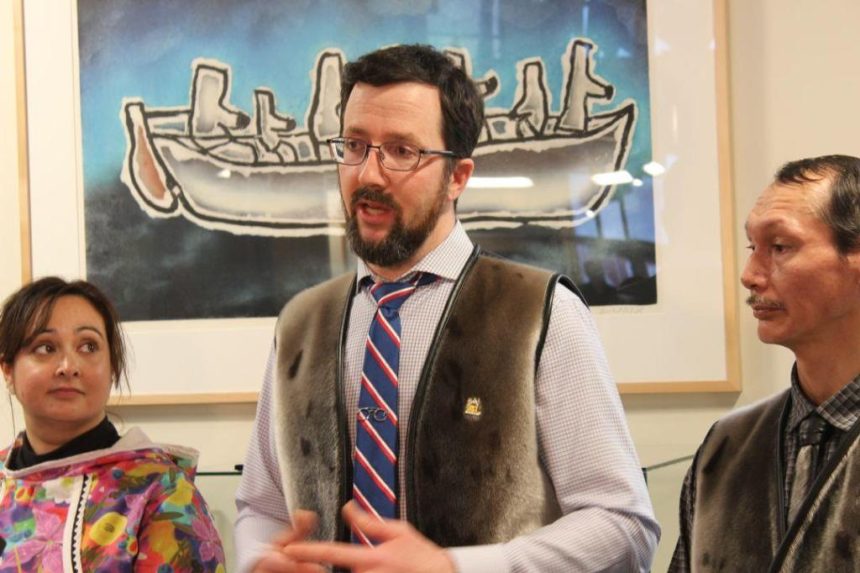
Published 6:12 pm Tuesday, August 25, 2026 By William Koblensky Varela Local Journalism Initiative Northern News Service Nunavut Premier John Main had just one word for U.S. President Donald Trump. “Stop,” Main said while speaking to reporters on Aug. 25 Trump has promised to impose tariffs between 10 and 50 per cent on $28 billion of Canadian imports as of Jan. 1, 2027, after trade talks collapsed with Prime Minister Mark Carney’s government. Canadian-made steel, aluminum, copper, cars and furniture all face tariffs, while oil, potash, and fish do not. The Canadian prime minister will launch counter-tariffs between 15 and 50 per cent on $27.6 billion of U.S. imports as of Sept. 8, including cellphones, fish and aluminum, Carney announced Aug. 25. Most of the impacts from the trade war will be felt in Ontario, Quebec and British Columbia, Main said, but Nunavummiut still have to deal with a high cost of living that could get even higher. “Our biggest concern is around cost of living, and with the potential for counter-tariffs to negatively impact the cost of living, drive the cost of living even higher. It’s something we’re concerned about,” Main said. The federal government is spending $7.5 billion to support employees and businesses affected by tariffs. As for the Government of Nunavut, no support programs are being announced just yet. Main said he wasn’t sure which industries in the territory would get hit worst by tariffs, but the mining industry was monitoring its position. U.S. tariffs on Canadian-made steel have been at 50 per cent since June 4. “This could be protracted; it could be lengthy dispute. Ultimately, it’s quite sad because it is very unnecessary, from my viewpoint,” Main said. The Federal, Provincial and Territorial Committee on Internal Trade is coming to Iqaluit “later this week” in the wake of a collapsed trade deal with the U.S. Minister responsible for trade Craig Simailak will co-host the meeting. “We’re hoping for continued progress on internal trade, making it easier for different jurisdictions to to work with each other, labour mobility or sale of goods and purchase of goods,” Simailak said. The Canadian Federation of Independent Businesses gave Nunavut the lowest grade for internal trade in the country in July, citing hunting and fishing protections, along with not recognizing out-of-territory products. Main said he had read a summary of the report. “We realize that we have a lot of work to do in terms of our our own territory, the supports that are available to businesses, the services that are available to businesses,” the premier said. The last time the Federal, Provincial and Territorial Committee on Internal Trade met was on July 21, when NWT and Nunavut premiers decided against signing a Direct-to-Consumer Alcohol Agreement to preserve communities’ decision-making on alcohol sales.
Premier Main tells Donald Trump to stop