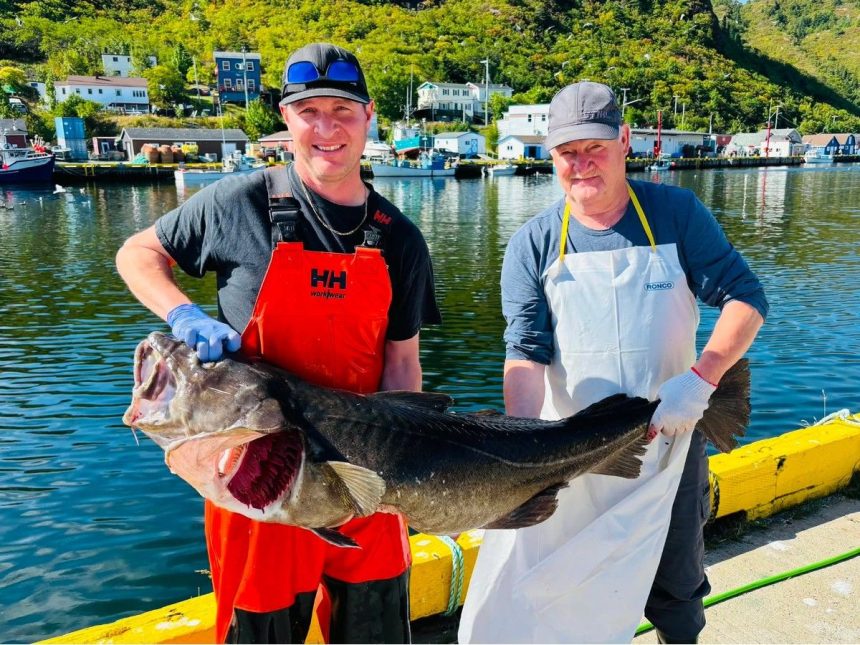
Article content“They come up when they’re not on the water, and they cut out the tongues and they cut out the cheeks,” Chafe said.Article content Bernard Chafe with his son, Justen Chafe, holding up a fresh cod catch. The family catches and processes its fish daily. CONTRIBUTEDArticle content“My son Justen is in the process of learning the skill of filleting a fish right now. And he’s getting pretty good at it, actually.”Article contentThe boys’ interest has not been constant over the years, but Chafe has noticed a change this season.Article content“It seemed like they started out with a lot of energy and then weaned away a little bit,” he said.Article content“But this year in particular, both of them are showing a big, big interest in fishing.”Article content Owen Chafe holds up a fresh cod catch while out on the a fishing boat. CONTRIBUTEDArticle contentThe boys have also become familiar faces to people who follow Chafe’s Cod Fillet online.Article content“A lot of people look forward to seeing the grandchildren cutting up the tongues and cheeks,” Chafe said. “They’re really impressed with them.”Article contentA GOOD YEAR FOR CODArticle contentThere are plenty of fish for the family to work with this season.Article content“This year, probably what I’ve seen over the years since moratorium, it’s probably the best year for fishing in our particular area,” Chafe said.Article contentArticle content“The fish is really good size.”Article contentChafe said strong catch rates were also being seen along the southern shore, including around Bay Bulls and Witless Bay, as well as further north.Article contentEarlier in the season, Chafe noticed something different in the fish.Article content Austen Chafe and his grandfather, Bernard Chafe, hold up a fresh cod catch. CONTRIBUTEDArticle content“This year the fish seemed like it was a little bit tame. It didn’t seem like they were feeding really well.”Article contentAs the capelin arrived, he said, that changed.Article content“As the capelin came around and the cod started to feed on the capelin, right now, the cod are really healthy,” he said.Article contentChafe said he could only speak to what he saw in his own fishing grounds.Article content“In our area the stock is as good as it ever was,” he said.Article content“There’s a lot of fish showing up on the sounders and there’s really good catches.”Article contentSIX DECADES ON THE WATERArticle contentChafe now fishes with gillnets, although handlining remains his preferred method.Article content“I had some issues with my arms, and if I wanted to continue fishing, I had to change over to gillnets,” he said.Article content“But when a fish is taking your bait, you can feel it. They’re taking it right in.”Article contentArticle content Austen Chafe cuts the cheeks from a cod as he learns the skills of his family’s fishing trade. CONTRIBUTEDArticle content“When you draw back on your line and you feel it’s like a dead weight, you know that you got something big. There’s no feeling like it.”Article contentThe biggest cod Chafe remembers catching weighed about 65 pounds. He was around 22 at the time.Article content“I still can remember that day,” he said.Article content‘HE WANTS TO GO FISHING’Article contentAusten and Owen are continuing to learn different parts of the work alongside their grandfather and their father, Justen.Article contentFor Austen, the school calendar does not quite line up with his plans for the fall.Article content Austen Chafe weighs a bucket of cod cheeks as he learns the skills that have been passed down through his family’s fishing tradition. CONTRIBUTEDArticle contentInstead of going to school in September, October and November, he wants to spend those months fishing and return to school afterwards.Article content“He wants to go fishing,” Chafe said with a laugh.Article contentFor Chafe, seeing his grandsons become part of the work has been rewarding.Article content“I really appreciate them taking an interest in it,” he said.Article content
Reeling in a new generation of cod fishers