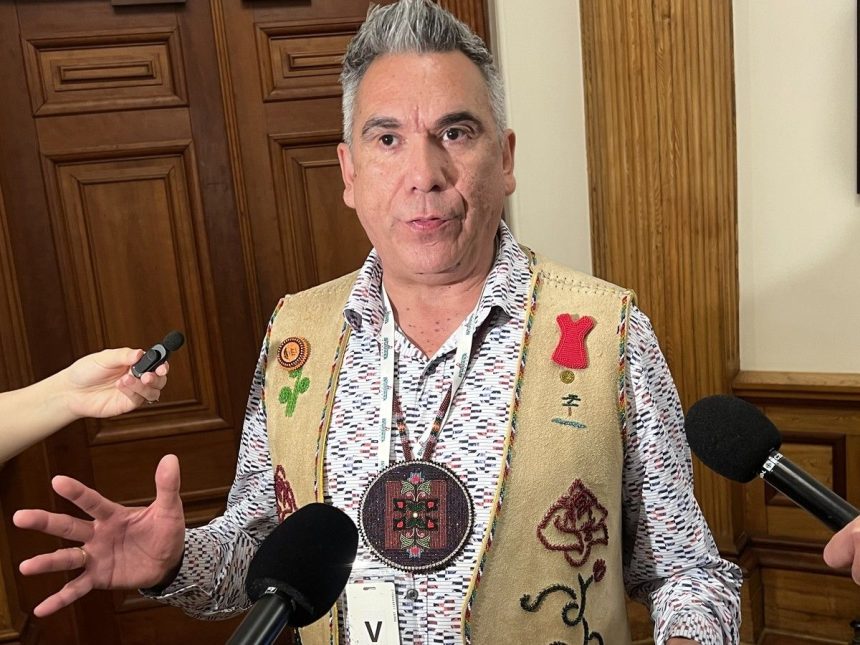
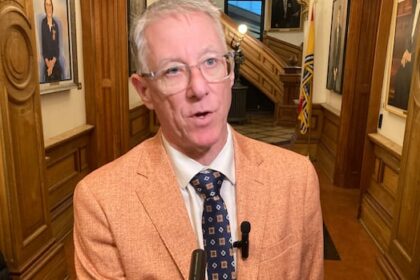
First Nation chiefs call for greater action on problems within the justice systemAuthor of the article: John Chilibeck • Local Journalism Initiative reporterPublished May 27, 2026 • Last updated May 28, 2026 • 4 minute readAllan Polchies, chief of St. Mary’s First Nation, says it’s about time the province held a public inquiry into what he says is the justice system’s racist treatment of Indigenous people. Photo by John Chilibeck/Brunswick NewsSix years after police shot and killed two Indigenous people in New Brunswick in separate tragedies, the provincial government has agreed to hold a First Nations-led public inquiry into systemic racism in the justice system.THIS CONTENT IS RESERVED FOR SUBSCRIBERSSubscribe now to read the latest news in your city and across Canada.Unlimited online access to articles from across Canada with one account.Get exclusive access to the e-Edition, an electronic replica of the print edition that you can share, download and comment on.Enjoy insights and behind-the-scenes analysis from our award-winning journalists.Support local journalism and the next generation of journalists.SUBSCRIBE TO UNLOCK MORE ARTICLESSubscribe now to read the latest news in your city and across Canada.Unlimited online access to articles from across Canada with one account.Get exclusive access to the e-Edition, an electronic replica of the print edition that you can share, download and comment on.Enjoy insights and behind-the-scenes analysis from our award-winning journalists.Support local journalism and the next generation of journalists.REGISTER / SIGN IN TO UNLOCK MORE ARTICLESCreate an account or sign in to keep reading.Access articles from across Canada with one account.Enjoy additional articles per month.Get email updates from your favourite journalists.THIS ARTICLE IS FREE TO READ REGISTER TO UNLOCK.Create an account or sign in to continue with your reading experience.Access articles from across Canada with one accountShare your thoughts and join the conversation in the commentsEnjoy additional articles per monthGet email updates from your favourite authorsArticle contentChief Allan Polchies told reporters at the legislature on Wednesday that several of the 15 First Nations chiefs met with Premier Susan Holt and Indigenous Affairs Minister Keith Chiasson last week and agreed to hold the inquiry.It was a long-standing demand of the chiefs, who were furious the previous Progressive Conservative government wouldn’t listen to them. The killings caused deep anguish in their communities.Details haven’t been ironed out – such as how costs will be split – but both sides expect the inquiry to take place sometime this year.“It’s going to be led by Indigenous folks that, of course, should be able to get all the answers that are needed for this important topic,” said Polchies, the leader of Sitansisk or St. Mary’s First Nation in Fredericton. “Systemic racism is an issue in this province, and this is a major start.”In June 2020, police killed two Indigenous people. Both cops who fired their weapons were eventually exonerated, with no charges laid, upsetting the victims’ families and supporters.By signing up you consent to receive the above newsletter from Postmedia Network Inc.Article contentArticle contentChantel Moore, a member of the Tla-o-qui-aht from British Columbia, was shot and killed by an officer with the Edmundston Police Force on June 4, 2020, during a wellness check. The officer testified that Moore had come at him with a knife, and he didn’t have the time or space on her tiny back balcony to do anything but fire his weapon.Eight days later, an RCMP member shot and killed Rodney Levi, a Mi’kmaq man, in Sunny Corner, near Miramichi. The Mounties had been called when Levi acted erratically, brandishing knives, at a private residence. A taser did not subdue him and an officer fired his gun.Since then, police in New Brunswick have shot and killed two other Indigenous people, further raising tensions in First Nations.“We are fully supportive of an Indigenous-led inquiry on systemic racism, and obviously, this is just the first step,” Chiasson, the minister, told reporters. “There’s a lot of work to be done to kind of clarify that and kind of really put more framework on what it’s going to look like.”Article content Indigenous Affairs Minister Keith Chiasson says his Liberal government is trying to repair relations with First Nations. Photo by John Chilibeck/ Brunswick NewsThe previous Tory administration led by Blaine Higgs refused to hold an inquiry specifically about Indigenous people and their treatment in the justice system.Instead it appointed a systemic racism commissioner, Manju Varma, who produced a report in late 2022.The First Nations chiefs described it as inadequate.Polchies thanked the Liberal government for listening to First Nation concerns, including why incarceration rates are so high for Indigenous people. Although the province doesn’t track such statistics – raising the ire of New Brunswick’s auditor general – they are believed to be close to the national rate.Indigenous adults in Canada are incarcerated at rates roughly 10 times higher than other Canadians are jailed, what many observers believe is a spillover effect of colonialism, intergenerational trauma and socioeconomic disparity.“It’s something that we need to dive into and get a little bit deeper when it comes into the incarceration and why the numbers are so high,” Polchies said. “But importantly, we need to ensure that all New Brunswickers feel safe at the hands of our folks that are protecting our communities.”Article contentThe chief was at the legislature for another reason altogether: in a separate move, Attorney General and Justice Minister Rob McKee introduced a bill on Wednesday that would put First Nations bylaws into the Provincial Offences Procedure Act.This will give the bylaws teeth. Up until now, RCMP and other police forces were reluctant to enforce First Nations bylaws, stating they wouldn’t pass the scrutiny of the courts. With the change, police officers and special constables or peacekeepers will be encouraged to make arrests or deliver fines. Justice Minister Rob McKee says First Nations bylaws will be enforced by police once a new bill passes into law. Photo by John Chilibeck/ Brunswick NewsThe most controversial of these bylaws would be several that ban people from those Indigenous communities, so-called ‘undesirables,’ such as suspected drug dealers or other unsavory characters.But two fundamental freedoms in the Canadian constitution under the Charter of Rights and Freedoms include freedom of association and freedom of movement, which seemingly contradicts such a ban.Still, Polchies welcomed the bill’s introduction.Article content“We have a number of folks that come through our communities that, of course, we don’t want there,” the chief said. “Folks that are being negligent to our people. So, we have the power to identify undesirables. And when we identify them in our communities, we expect, of course, the law enforcement, who we pay, will remove those folks that we are asking to be taken out of our community.”Another bylaw that could come under scrutiny was passed by Madawaska First Nation beside Edmundston.In 2023, the First Nation in northwestern New Brunswick passed its own law regulating cannabis and tobacco sales.However, such legislation isn’t granted explicit permission in the federal Cannabis Act and hasn’t been tested in court.Reporters asked McKee whether such bylaws would pass muster. He said First Nations would have to re-write their bylaws to make sure they were compliant with the act and wouldn’t violate the Charter of Rights and Freedoms.“Certainly, if something is flagged, as, you know, a possible charter violation, then our attorney general office, I’m sure, would advise the appropriate First Nation that, you know, there might be an issue with some of their laws.”Article content
Years after fatal Indigenous shootings, N.B. to hold public inquiry