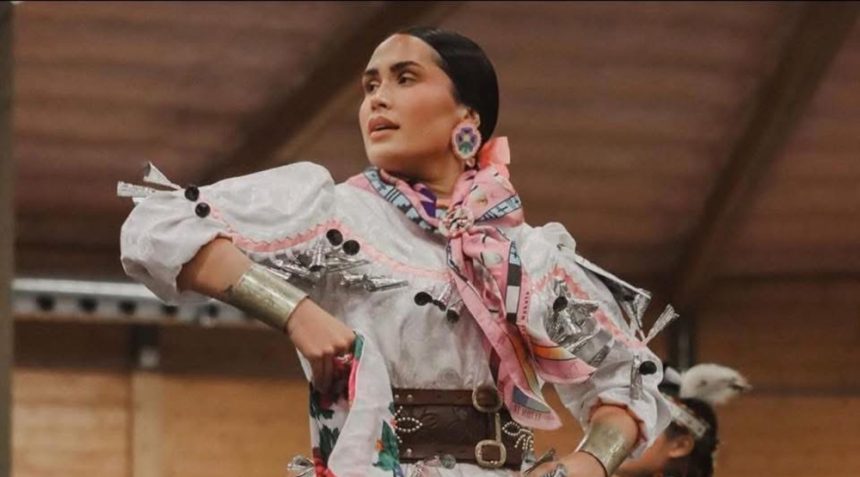
Brooke Metchewais is using her platform as Miss Indigenous Canada 2026 to empower youth through culture, wellness and leadership. Facebook photo. By Chevi Rabbit, Local Journalism Initiative Reporter (ANNews) – For Brooke Metchewais, leadership is not about standing above others. It is about standing with community, listening to the voices of the people, and creating opportunities for future generations. As Miss Indigenous Canada 2026, Metchewais is using her platform to promote youth mentorship, cultural connection, wellness, and community empowerment. The Miss Indigenous Canada program provides a national platform for Indigenous women to develop leadership skills, celebrate culture, participate in community initiatives, and represent their communities through advocacy and service. Metchewais is a member of Cold Lake First Nations in Treaty 6 Territory, Alberta. Her family roots also connect to Big Island Lake Cree Nation in Saskatchewan several generations ago and Saddle Lake Cree Nation through her kokum’s side. “I am from Cold Lake First Nations, which is in Treaty 6 Territory,” Metchewais said. “I grew up in Fort McMurray, which is in Treaty 8 Territory. I currently live on the traditional, unceded territory of the Stó:lo people in the Fraser Valley region in British Columbia.” Through her work in health services and her involvement with community boards, Metchewais has developed a strong understanding of the importance of creating supportive spaces where people feel connected and valued. For Metchewais, many of the teachings that guide her come from the Medicine Wheel and the importance of caring for the whole person. “The values that I kind of grew up with were just surrounded around the Medicine Wheel and taking care of yourself, your spirit, your mental health, your emotional health, and your physical health,” she said. Those teachings have shaped how she approaches leadership and wellness. “I know that all of those have to sort of be somewhat in balance,” she said. “Whether that’s more water or exercise, sunshine, laughter, it’s important to take what you need.” A major part of Metchewais’ journey has been reconnecting with her Indigenous culture and community. As an adult, she began powwow dancing, which became an important part of her personal and family healing journey. “For me, that’s been a huge part of my culture,” she said. “It’s been a huge part of healing for my family as well.” She has also been reconnecting with language that was lost through generations. “Relearning the language because unfortunately, it was lost in my family, and just being more present in community has really helped me.” Metchewais’ passion for youth empowerment is reflected in her community project, Mamawi Mentorship. “My community project was actually on youth mentorship,” she said. “Mamawi in Cree means all together, together as a group, a collective well-being.” The project focuses on creating accessible cultural programming where Indigenous youth can connect with Elders, Knowledge Keepers, and mentors. “I really just want to extend my care and our attention to our youth, having proper, low-barrier, accessible cultural programming for those youth,” she said. Through her work in Child and Family Services, Metchewais has witnessed the importance of ensuring Indigenous youth have access to cultural supports, especially those living in urban communities. She believes young people should feel welcomed regardless of where they are in their cultural journey. “It’s okay that they might not know the language, or a ceremony, okay that they might not be a powwow dancer, but to come as they are and to walk alongside them in that journey.” Her commitment to wellness also inspired her 300-kilometre running challenge, which connected physical activity, fundraising, and conversations around health, belonging, and harm reduction. “We only get one body, and it’s important to take care of it and nourish it,” she said. Through her work in health services, Metchewais has seen how important it is for people to feel included and supported. “It’s so critical to feel safe, heard, and seen,” she said. Metchewais also shares her personal journey of sobriety as part of her message of empowerment. She recently celebrated three years of sobriety and believes that sharing personal experiences can help inspire others. “For me, I’m actually celebrating three years of sobriety coming up next week,” she said. “It’s really important for me to speak on that.” She believes representation plays an important role in helping Indigenous youth see new possibilities. “When I was growing up, I didn’t really see a lot of Indigenous representation in spaces like leadership,” she said. Today, she hopes to be part of creating that visibility for the next generation. “I think that embodying those characteristics and taking care of yourself is really going to show the next generation that we can be well.” Metchewais believes communities are entering a time where the focus must shift toward healing and creating healthier futures. “We hear the word intergenerational trauma all the time,” she said. “And it’s now, we’re in a time now, we got to change the narrative.” As she begins her year as Miss Indigenous Canada 2026, Metchewais says her role is to listen, learn, and support the priorities of the communities she represents. “I want to be the vessel,” she said. “I want to be the arms and legs of what the community wants and needs this year.” For Metchewais, the title is not about individual recognition. It represents a responsibility to serve. “I really came into this program not feeling like there was ever going to be a winner,” she said. “There’s no winner. It’s a matter of just who’s going to be the representative for the year, because we’re all winners.” “Our community members know what they need,” she said. “My role is to listen, to learn, and to help carry that vision forward.”
Brooke Metchewais Uses Miss Indigenous Canada 2026 Platform to Empower Youth