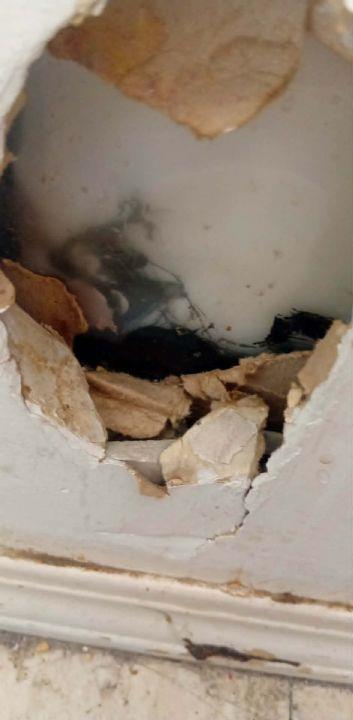
Published 7:30 am Thursday, August 13, 2026 By William Koblensky Varela Local Journalism Initiative Northern News Service The Cambridge Bay Housing Association receives complaints about mouldy public housing units every few months. More often than not, though, inspectors find mould in the units before the tenants raise an issue, according to Vicki Aitaok, manager of the community’s housing association. “We have right now, maybe 17 or 18 vacant units. And of those 18, 15 of them are so badly damaged from tenant damages that it’s taking us months before we can get that unit back into circulation again,” Aitaok said. Those units have a hole in the walls of every room and significant water damage, according to Aitaok. She said most mould in Cambridge Bay’s public housing units is due to a lack of cleanliness and not reporting issues to the housing association. “We have a cleaning problem. We really do, and reporting damages,” Aitaok said. Keith Lear, chair of the housing association’s board, agreed with Aitaok. He said failing to report issues with units is a significant contributor to the mould issue. “A lot of our problems with mould is lack of communication from our tenants. Our tenants have to notify us of issues with broken windows, that sort of thing, before it gets too big,” Lear said. The Nunavut Housing Corporation offered a different explanation for mould in public housing units. Overcrowding, old homes and a harsh climate are to blame, according to Winter Fedyk, a communications employee at NHC. “Mould in Nunavut housing is a persistent issue driven by Arctic weather conditions, high occupancy levels, ventilation performance in older units and the age of much of the public housing stock,” Fedyk stated. “Addressing it is part of why NHC is investing in both new construction and major retrofit work.” Aitaok said the housing association sometimes finds up to eight people living in a unit intended for three residents. Local housing organizations, like Cambridge Bay’s housing association, are best placed to speak to concerns for their communities, according to Fedyk. The housing association looks after 350 units and has 13 maintenance staff. That means catching problems early is paramount, according to Lear. “A lot of times we can’t get to everybody’s house in a year. We can’t get to everybody’s house in two years, three years,” Lear said. One tenant, Kate Mingilgak, told Nunavut News last month that her family has been complaining to the housing association about mould in her public housing unit for the past year. Mingilgak said the housing manager — Aitaok — told her that “they can’t do anything.” Aitaok said the housing association responds to complaints about mould, but tenants need to hold up their end of the bargain. “We do not leave a unit with mould, unless the tenant just refuses to do their part. So we fix it, and then it maybe it goes back to the same way it was before because they still are not learning to follow some of these tips and tricks on how to keep mould out of their unit and how to deal with mould,” Aitaok said. Both the Cambridge Bay Housing Association and the Nunavut Housing Corporation said they could not comment on specific client cases. Educating tenants on how to avoid getting mould in their homes is what the Cambridge Bay Housing Association is focusing on now. Moisture coming in from broken windows, cooking without ventilation, allowing leaking pipes to fester and not cleaning up water from baths and showers are all causes of mould in homes, Lear explained. “People are cooking soup on their stove, and they’re boiling a pot for three four hours, and they’re not turning on their their range hoods, which will suck out the moisture out of the house. And, of course, without range hoods being on or HRV units being on to pull that moisture out of the unit, then eventually it’s going to turn to mould,” Lear said.
Cambridge Bay Housing Association says mouldy homes are caused by tenants neglect, poor communication