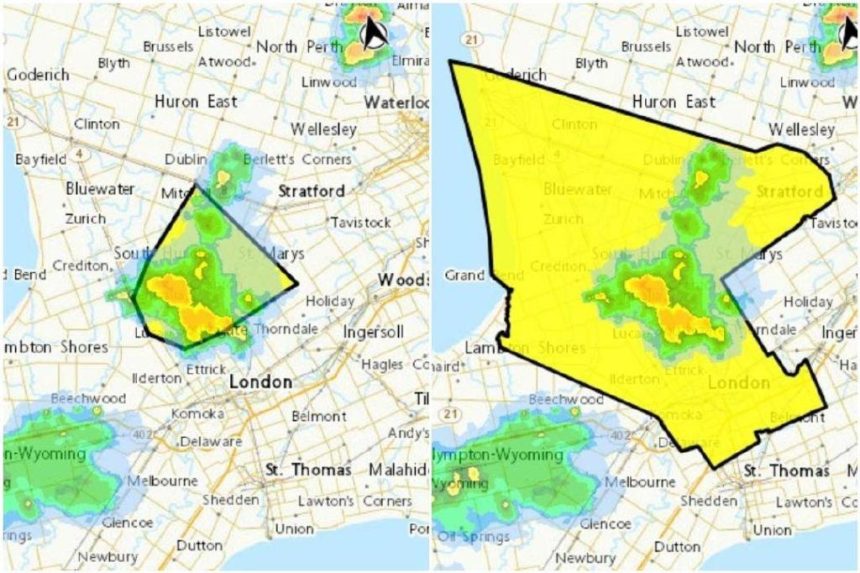
Published 2:44 pm Monday, August 17, 2026 By Lauren Collins/Black Press Environment Canada says its new weather alert system will help to better target notifications to a more precise location. Forecasters are now using a “polygon” system for thunderstorm and tornado warnings to trigger alert notifications to people along the weather system’s route. It was rolled out Aug. 11. That same day, Alberta was the first to receive one of these new targeted alerts, Jonathan Bau, senior meteorologist with Environment Canada, told Black Press Media. Environment Canada says that many predetermined alert zones are large and geographically spread out. That means a weather alert that affects one part of a zone may not affect another. Bau said forecasters are now able to highlight an area where a thunderstorm or tornado is “expected to track for the next 10, 30 or 60 minutes.” He said anybody who is under the polygon on the map will then receive push notifications for the warning alerts. He said part of the change is to “kind of reduce the over-alerting fatigue.” “It’s a nice, blue, sunny day and then you receive the thunderstorm alert, but really it’s 50 kilometres to the south of them, just all because they live within the predefined zones,” Bau said of the previous alert system. “With this new targeted polygon alert alerting system, we are more able to target the immediate threat and you know the people that are downstream of this threat.” Environment Canada can also now issue multiple severe thunderstorm or tornado warnings in the same area at the same time. Forecasters can even overlap them, making it possible to track different weather threats within the same or different storm systems. These targeted warnings mean that people who receive an alert are more likely to experience impacts from the weather system. Environment Canada says that all other types of weather alerts, such as rain or heat, will continue to be issued to the broader predetermined alert zones, including severe thunderstorm and tornado watches. Environment Canada says it’s applying the polygons to thunderstorms and tornadoes first as these weather systems benefit the most from using polygons “because they tend to be more localized compared to other types of alerts.” These latest alert changes come after Environment Canada rolled out a colour-coded weather alert system in February. It’s a three-tiered system: yellow, orange or red. Yellow is for hazardous weather that may cause damage, disruption or health impacts, which are moderate, localized and/or short-term. Yellow alerts are the most common. Orange is for severe weather that’s likely to cause significant damage, disruption or health impacts, which are major, widespread and/or may last a few days. Orange alerts are uncommon. Red alerts are rare, Environment Canada says. They are for very dangerous and possibly life-threatening weather that will cause extreme damage and disruption, with impacts that are extensive, widespread and prolonged.
Environment Canada rolls out new alert system for thunderstorms, tornadoes