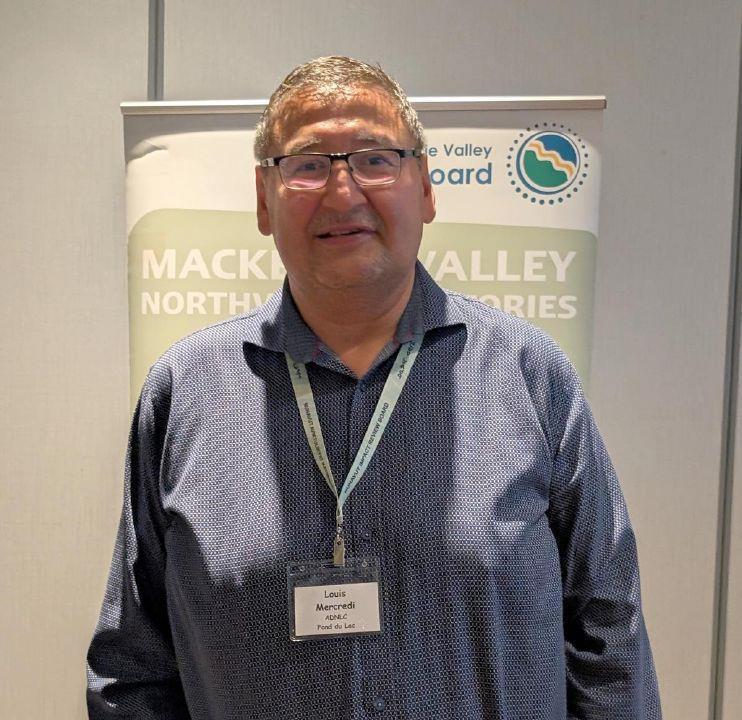
The proposed Grays Bay road and port project could cause a sharp reduction or even bring about the demise of four caribou herds, according to a contingent of intervenors at a community information session held in Yellowknife on Oct. 26. A nine-person team who travelled from Fond Du Lac, Sask., and who feel that their community and people will be heavily impacted by this development, said that the proponents do not fully understand the potential impacts of the 230-km, all-season road and are exaggerating whatever benefits the project may generate. They said that caribou have been in the area for hundreds of years and are acutely sensitive to changes to the lands they travel and calve on. Since mines started coming into the North several decades ago, caribou herds have continued to decline with some, such as the Bathurst herd, hovering on the edge of extinction, say those opposed to Grays Bay. Many believe the road could wipe out that herd entirely. The Bathurst herd has gone from almost half a million animals in the mid-1980s to about 3,600 today, including a 47 per cent decline in the last three years. The intervenors are also concerned about the Beverly, Dolphin and Bluenose herds, noting that all of their numbers have shown a steady drop since mining started in the North. They say it’s wrong to think this is just one road that will be built, but instead it will lead to a “spiderweb” of roads that the caribou may refuse to cross to reach their winter or calving grounds, or routes that hunters or predators could use to further reduce their numbers. Louis Mercredi, a former chief and councillor from Fond Du Lac, said the caribou used to come to his northern Saskatchewan community, but now harvesters are having to travel farther to find them. He said the ungulates refuse to cross mining roads or travel in areas that have been impacted by human development, which can include walking under transmission lines. The animals are sensitive to noise, vibrations, exhaust fumes from the equipment and even the materials that will be extracted from the mines, said Mercredi. In addition, fires are impacting the caribou’s food sources. This can have serious consequences for First Nations people whose diet is still highly reliant on caribou, said Mercredi. Beyond food, the animals’ hides are used for clothing, beading, making drums — activities that the Dene consider core to their identity. If there is no caribou, the traditional lifestyle of the Dene who are known as the caribou people will be lost, according to Mercredi. “Who are we advocating for? The people who have always lived here or for the developers?” he asked the members of the Nunavut Impact Review Board, who hosted the event. Taxpayers’ dollars One participant who had travelled from Black Lake, Sask., but originally hails from northern Manitoba, said his community was one that the colonial government had moved in the late 1950s to strengthen Canadian sovereignty. However, he said, his people were moved without the benefit of shelter or even the basics necessary to sustain life. The result was that many died from heartbreak and alcoholism. The work being done to build the Grays Bay road is another way that First Nations will be exploited without due care and respect for the traditional lifestyle and people, he said. Kevin O’Reilly, a former Yellowknife MLA and now with Alternatives North, said he’s against any development that will rely so heavily on the public’s money yet could have devastating impacts on the caribou. He asked how we, in good conscience, spend taxpayers’ dollars on a project that could cause the extinction of at least one of Canada’s caribou herds. Regarding food security, project proponents stated that because the port will be permanent infrastructure, it could allow for barges to bring in supplies for at least three months a year. Those supplies could take the form of housing packages and other goods needed by remote communities. However, opponents countered that while it is true Northern communities are often ignored and suffer from a lack of supplies, their main diet is caribou and it’s more meaningful to ensure a healthy stock of country food. It was reiterated by opponents that mines come and go, often having short life spans, which means that after a few years, for example, it could take taxpayers 20 years to pay for the remediation. O’Reilly noted that over a 20-year period, three mines have closed in the North, leaving taxpayers to foot cleanup costs. Further, Mercredi asserted that proponents are exaggerating touted job numbers. While it was suggested that the mines created by new roads could mean several thousand jobs in the mining sector, he argued that only a fraction of those positions will be filled by Northerners. Instead, most of the workers will have to be imported. “I feel that we are being fed a lot of false information,” he said. Mercredi also spoke of potential impacts on the permafrost due to heavy equipment used on work sites. That could further impact caribou habitat and the vegetation that they consume. “I don’t think that project should go ahead at all, at all,” he said. “I would rather see our caribou and people go ahead for the next seven generations.” Brendan Bell, CEO of West Kitikmeot Resources Corp., which is advocating for the project, stated that the goal is to connect the Grays Bay road to the national highway system, thereby making the movement of goods easier and cheaper. West Kitikmeot Corporation is a joint venture with the Kitikmeot Corporation, which is owned by the Kitikmeot Inuit Association. Among the caribou protection measures being considered are gates along the road, hired monitors or “guardians,” and fine particulate matter to cushion the animals’ hooves, Bell noted. When asked who would be responsible for maintenance and upkeep costs for the new road, Bell said that they could look at tolls levied against users. That money could be funneled back to the NWT and Nunavut governments to spend either on the roads or other services, such as healthcare and education. Bell added that the federal government and private investors will be needed to help fund the costs of the project. When asked if First Nations in his area wanted the road to go ahead, Mercredi said if it proceeds, it should only be after long conversations with all stakeholders. Sarah French, with the Government of Canada’ Major Projects Office, said the consultation process would not be limited to a one-year approval process as being pushed by the Carney government under the Build Canada Strong program, but would instead include extensive consultations with First Nations. The second public hearing took place in Inuvik on Oct. 28. All of the material on the public record will be compiled and released widely as soon as possible on the board’s website.
Caribou versus resource riches debate heats up at Grays Bay road and port information session