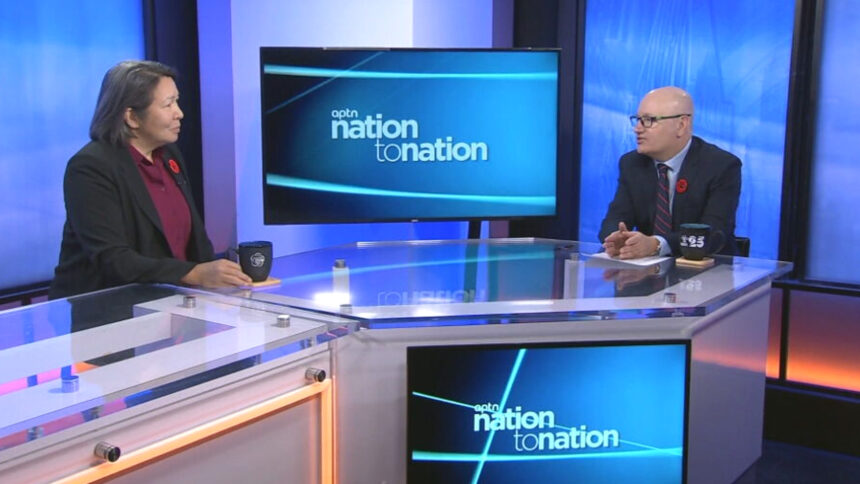
A columnist with the Hill Times says a First Nations meeting with First Ministers this week was not the appropriate venue to be discussing abolishing the more than a century-and-a-half old Indian Act. “It seems to me that a lot of things were said at mics on that day that people really regret,” Rose LeMay said. “I don’t know anyone who would disagree that the Indian Act has to go. It’s a racist piece of segregationist law. It always has been. Whether we take out a clause here or there it’s still fundamentally a barrier to human rights. Especially for First Nations women. We’ve seen all the debate on S-2 and trying to bring in the one parent instead of the second-generation cut-off. Overall, it’s a piece of racist legislation. Was that day the day to raise it? I don’t think so.” Lemay said it is her understanding that much more time in the meeting was spent on discussing how the government’s proposed Bill C-39 – the Building Canada Strong Act – could affect First Nations rights when it comes resource development. She also said more pressing issues including First Nations access to health care and systemic discrimination against First Nations women should have been given more of a focus by government ministers in post meeting media scrums. The meeting, which took place on Monday in Ottawa, was the first time First Nations leaders had their own table with the prime minister and provincial and territorial premiers. The idea of abolishing the Indian Act was first raised by Manitoba Premier Wab Kinew during a press scum and later brought up again by Prime Minister Mark Carney during his closing statements at the meeting. APTN News online journalist Karyn Pugliese said one of the more interesting discussions to come out of it was talk of making changes to the Natural Resources Transfer Agreement to include First Nations. “The Natural Resources Transfer Agreement was signed in 1930 by which the federal government gave resources to the provinces,” she said. “So, this is to say, the provinces own resources like oil and minerals but First Nations were never consulted on that and chiefs would be quick to say they never gave up these resources and so they were there to raise the issue.” First Nations in provinces who are part of the NRTA – Manitoba, Saskatchewan and Alberta – have long argued they should receive a percentage of resource revenue royalties that these provinces currently collect solely for themselves. The issue has once again risen to the fore as the Carney government pushes ahead on resource development projects while at the same time saying First Nations should be part of and benefit from these projects. Read More: Nearly 200 First Nations leaders, the prime minister and premiers gathered for a historic meeting about almost everything. Now what? U.S. midterms A veteran Native American journalist says Native American women are running in some of the key races in the upcoming U.S. midterm elections. “Two of the candidates are favoured – in Minnesota Penny Flanagan and Mary Peltola in Alaska,” Mark Trahant said. “And I think it’s curious that when the first Native women were elected to the U.S. House of Representatives – which included Deb Haaland who’s running for governor – it was two, it wasn’t one. And at the time I remember writing that two made all the difference in the world because they play off of each other, they could not have to be everywhere together. And I think that same sort of thing is important for the Senate because being two will allow them to basically come up with a strategy rather than being the only and isolated as such.” Flanagan and Peltola are running as Democrats for Senate seats. A third Native American woman, N’Kiyla Jasmine Thomas, is also running for the Democrats seeking a Senate seat in Oklahoma. A Native American woman has never been elected to the U.S. Senate. Deb Haaland, a former of secretary of the interior under President Joe Biden, is running for governor as a Democrat in New Mexico. The midterm elections take place on Tuesday. Fraser NeedhamReporter | OttawaFraser spent the last 20 years working in both print and radio in Saskatchewan – mostly in the northern part of the province. Before joining APTN’s Ottawa bureau, he was news director for the Missinipi Broadcasting Corporation working out of their Prince Albert office. He holds a bachelor of arts degree in political science from Carleton University and a diploma of journalism from Algonquin College. Continue Reading
Columnist says more pressing issues on agenda at First Nations meeting than abolishing Indian Act



Leave a Comment