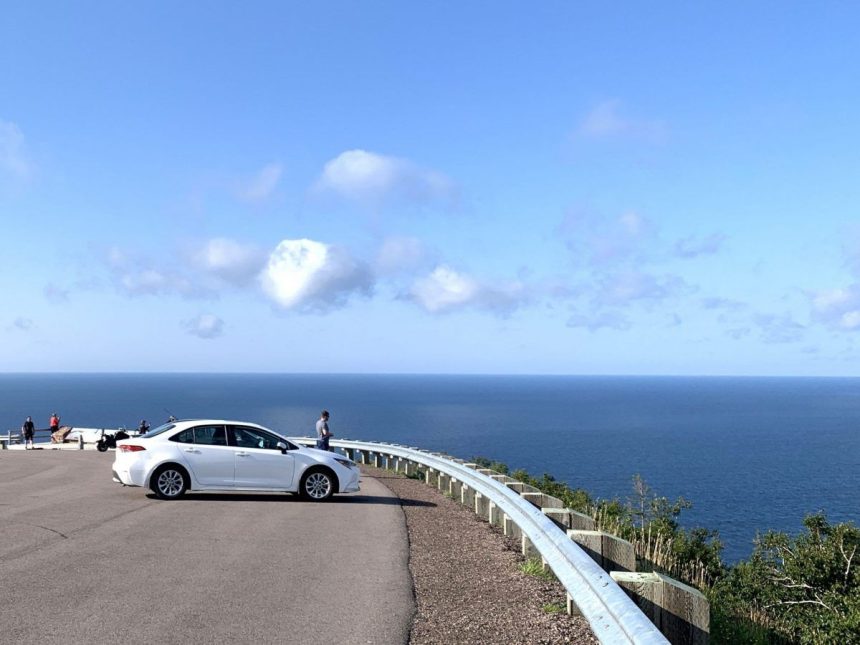
Article contentEarlier this summer, Smith sent off a proposal for his organization to perhaps take over operation of the empty Port Hastings building and offer at least a possibility of having a place where travellers unfamiliar with Cape Breton Island can have in-person consultations on things to see and do during their stay. Smith’s proposal did receive support from all five of Cape Breton’s municipalities.Article contentHowever, the province’s Department of Public Works, which owns the vacant building (and, according to MacIsaac, the Strait Area Museum building), ultimately rejected Smith’s proposal. In a letter sent to Smith on July 16, and viewed by the Post, the department responded that it “is currently in the design process for a new roundabout/interchange at Port Hastings to improve the safety of all motorists travelling on and off Cape Breton Island.Article content“To ensure a proper and efficient design, these transportation improvements will require the lands currently occupied by the VIC (visitor information centre).”Article contentArticle content Tourists take in a view of the Atlantic Ocean at a MacKenzie Mountain lookoff along the Cabot Trail near Pleasant Bay. “People are coming in and expecting to, say, go around the (Cabot Trail) and cover the whole island in two hours. I think they need to understand how big of an area that is and how much time it’s (really) going to take,” said Angie MacIsaac, executive director of the Port Hastings Historical Society. Photo by IAN NATHANSON/CAPE BRETON POSTArticle contentNO REPLACING IN-PERSON CONSULTATIONSArticle contentEarlier this year, Lohr told reporters that “most of you probably experience that when you travel, you’re using your iPhone, you’re using the internet for information. We see that’s the trend in terms of the visitor information centers. People are accessing information in different ways.”Article contentMacIsaac countered that technology can’t replace the in-person consultation experience, especially from people who know the island well.Article content“That’s what visitors want,” she said. “They want a personal connection.Article content“People are coming in and expecting to, say, go around the (Cabot Trail) and cover the whole island in two hours. I think they need to understand how big of an area that is and how much time it’s (really) going to take to see our whole island — and that needs a personal touch.Article content“So we’re hoping we’re going to be able to do that or fill some of the need for that.”Article contentMacIsaac said she is calling for interested volunteers, as the number of extra staff consultants will depend on willing volunteers.Article contentArticle content“We have summer staff hired within the museum, so the visitor information centre will probably be me, playing in the majority of answering questions, and volunteers. We’re going to try to base it on the whole premise of talking to a local,” she said.Article content“So we’re reaching back into the community, and I think this is the way to keep moving forward in this area.”Article content The Cap Rouge lookoff — also known as the ‘money shot’ for shutterbugs, as it’s the location often seen on visuals looking to best represent the Cabot Trail in one picture. Photo by IAN NATHANSON/CAPE BRETON POSTArticle contentWHAT’S INVOLVEDArticle contentSo what is involved in setting up a community-based visitor information centre?Article content“Basically, you can decide which areas you’re going to cover,” MacIsaac said. “It’s a little bit of funding from the province to be official, so we’ll be branded in tourist books and on everything else as a community VIC.Article content“We’ll also look for funding in other directions, which we’re hoping that everyone will support us and move forward, and it’ll work. It’s been we’ve been doing it anyway, so we said why not?”Article contentMacIsaac said this will essentially be a one-year pilot project to see if they can operate as a visitor information centre in the years to come.
Community-based visitor information centre at Strait Area Museum