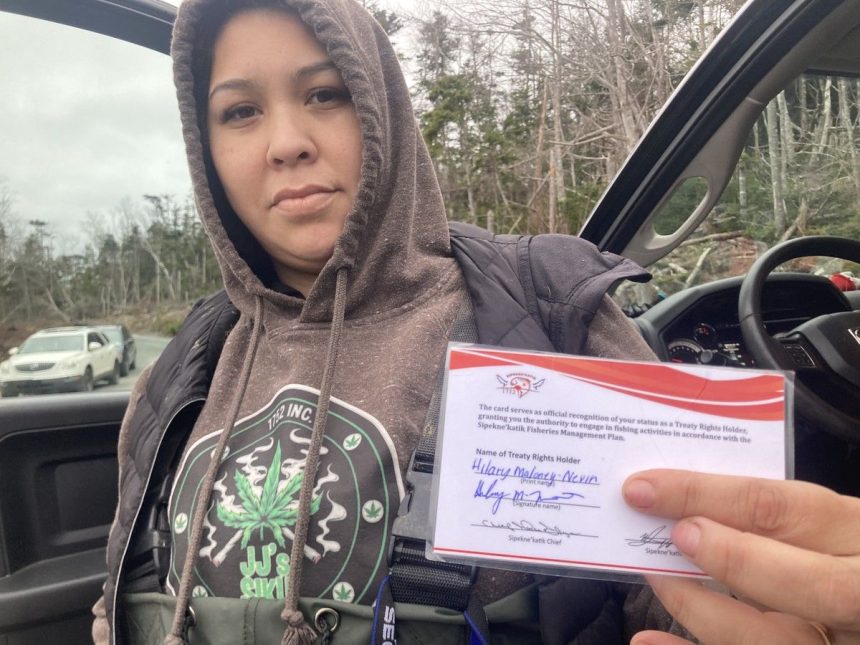
Industry veteran accuses feds of ignoring thriving black market for the seafoodAuthor of the article: John Chilibeck • Local Journalism Initiative reporterPublished Aug 13, 2026 • Last updated 2 hours ago • 3 minute readHilary Maloney-Nevin holds her license issued by Sipekne’katik First Nation in Nova Scotia under its self-governed elver fishery. Prices for the juvenile or baby eels has dropped dramatically in recent years. Photo by Aaron Beswick/ PostmediaA pioneer in Canada’s baby eel fishery is calling into question Ottawa’s claim it has beefed-up enforcement against poachers and worked hard to protect the coveted critters.THIS CONTENT IS RESERVED FOR SUBSCRIBERSSubscribe now to read the latest news in your city and across Canada.Unlimited online access to articles from across Canada with one account.Get exclusive access to the e-Edition, an electronic replica of the print edition that you can share, download and comment on.Enjoy insights and behind-the-scenes analysis from our award-winning journalists.Support local journalism and the next generation of journalists.SUBSCRIBE TO UNLOCK MORE ARTICLESSubscribe now to read the latest news in your city and across Canada.Unlimited online access to articles from across Canada with one account.Get exclusive access to the e-Edition, an electronic replica of the print edition that you can share, download and comment on.Enjoy insights and behind-the-scenes analysis from our award-winning journalists.Support local journalism and the next generation of journalists.REGISTER / SIGN IN TO UNLOCK MORE ARTICLESCreate an account or sign in to keep reading.Access articles from across Canada with one account.Enjoy additional articles per month.Get email updates from your favourite journalists.THIS ARTICLE IS FREE TO READ REGISTER TO UNLOCK.Create an account or sign in to continue with your reading experience.Access articles from across Canada with one accountShare your thoughts and join the conversation in the commentsEnjoy additional articles per monthGet email updates from your favourite authorsArticle contentEarlier this month, the federal Department of Fisheries and Oceans issued a news release stating the elver, or juvenile eel, harvest and enforcement had been a success this past season, which opened in April.“Fishery officers worked across Southwest Nova Scotia, Eastern Nova Scotia, and Southwest New Brunswick to promote compliance and protect the integrity of this high-value fishery,” stated the release issued by the department, often called DFO, of Aug. 5.“Fishery officers maintained a strong presence throughout the season.”But Mary Holland has a very different view.The businesswoman from Rothesay whose family started the industry some four decades ago said it was one of her firm’s worst years ever. She believes a thriving black market has caused the price of the seafood to collapse.“I would disagree with DFO’s press release of the 2026 season that its management of the elver fishery promotes compliance to support, particularly, rural Southwest New Brunswick,” she wrote in an email to Brunswick News of the area her company, Brunswick Aquaculture, fishes.By signing up you consent to receive the above newsletter from Postmedia Network Inc.Article contentArticle content“A major factor affecting profitability both for the licensed commercial and Indigenous elver fisheries was the dramatic drop in price of 80 to 90 per cent in 2026, to which I attribute the glut of elvers in the supply chain from the black market.”The department painted a different picture. It said licensed elver harvesters caught 8,385 kilograms of the 12,180 kg total allowable catch, up nearly 17 per cent from 7,170 kg in 2025.It noted that there was new scientific research taking place between fishers and the department, to monitor the health of the species, and more than 900 harvesters took part under First Nations licences, a high.It said where compliance could not be achieved through education, officers took enforcement action, issuing six tickets, making 33 arrests, and seizing elver harvesting and storage equipment. Officers also seized more than 77 kg of illegally harvested elver, which were returned live to their rivers of origin.Article content“Working closely with the Canada Border Services Agency, fishery officers also disrupted unauthorized exports and seized over 305 kg of elver destined for international markets,” the news release said.Holland has not seen eye to eye with the federal government for years. She has several lawsuits pending against the department, fisheries ministers past and present, and First Nations leaders and members.She accuses Ottawa of turning over the most productive rivers in her area to First Nations and cutting her quota so drastically it’s hard for her to make money.This year, her fishers only harvested 111 kg of the translucent, slippery creatures that are caught in the icy cold river estuaries at the end of their long migration from sea. Only a few years ago, they netted 10 times that amount.The market price for elvers was high as $5,000 a kg only four years ago, making them the most lucrative seafood by weight in Canada, an even better price fetched than the all-important lobster fishery.Article contentThis led to a rush on the water, with industry veterans complaining that poachers were grabbing every elver in sight and threatening violence if they didn’t get their way.Holland said given the relatively modest harvest this season, the plunge in prices was evidence the black market was thriving.“The Asian traders have figured out they can get all the product they want without having to pay historic prices,” she said. “In my opinion there will be no adequate conservation unless there is meaningful enforcement at river harvest sites – where and while the removal is occurring nightly – and then followed by meaningful sanctions.”Holland said her workers did not see adequate enforcement in Charlotte County this year.She accused the department of failing to respond to two consecutive nights of “blatant unauthorized harvest activity and a boat on one of the remaining rivers designated to me. We observed DFO making a patrol on the third night, when the poachers had not returned.”Brunswick News has asked the department to respond to the criticisms and is awaiting a response.More to come…Article content
DFO claims success, despite price collapse for baby eels