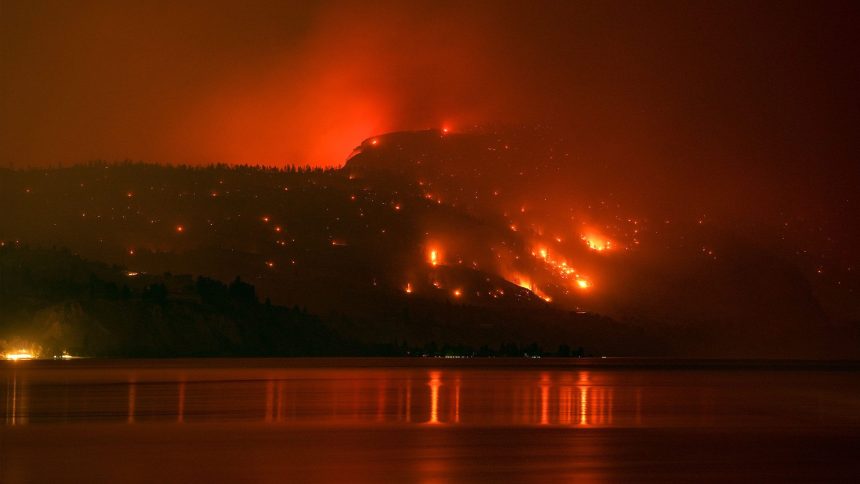
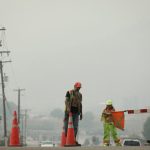
Cindy Blackstock is raising concerns after recently helping her brother evacuate a wildfire in the Lillooet area near Cache Creek, B.C. calling the lack of a coordinated response gobsmacking. Blackstock is from the Gitxsan First Nation and now lives in Tk̓emlúps te Secwépemc territory, but grew up around fire stations in northern B.C. Last week, she and a sister came to the aid of her brother whose home was under threat. “On my brother’s house cameras, they were putting the hoses around his house and on the roof and everything else, but there was still no evacuation order,” Blackstock told APTN News. “In his situation, there was a fire alert by the neighboring First Nation, a fire alert by the other regional district, but the one where he was in did not set it. And so it took some advocacy to get them to do that even though the fire was just over the other side of the mountain.” Blackstock, who is a well-known First Nations child welfare advocate, said her father worked for the fire service when she was growing up and her brother followed in his footsteps working for the B.C. Forest service for decades. “One of the things that just is gobsmacking to me is how many different jurisdictions there are when it comes to declaring fire alerts or evacuation orders…each one of them has independent authority to do these things along with each First Nation. It doesn’t appear to be the level of coordination that there should have been on this with my brother in the area he was in,” Blackstock said. “When we were growing up in the bush, we knew the bush, knew fire behavior and everything else like this. But they’re not using that type of knowledge that they should be using to help, first of all, deal with drought conditions, which is severe drought underlying that. Number two is, to really understand the land and the landscape and get these fires under control at their earliest stages. I was so gobsmacked that it took them so long to declare a state of emergency when there were so many people evacuated. And frankly, there were so many vacationers in the Okanagan area.” Blackstock said despite Hwy 97 being closed in both directions due to wildfires, there was no evacuation order. She was surprised to see a lot of vacationers travelling in the direction of the fire “clogging up” different areas. They also encountered delays due to roadwork taking place with one lane closed, making for slow going not only for people leaving, but for frontline workers trying to access the area. “There were fire trucks and emergency vehicles that were in the lineup while they’re doing paving,” Blackstock said. “When we were driving out, there [were] seniors and we stopped to talk to them. Because the only way that you get a fire alert in these regions is if you proactively go on to a website or app. This is an area where there isn’t tech service or that kind of thing. There’s some phone service. You’ve got email, basically and this Elder wasn’t even aware that there was a fire alert. And, so we were briefing her up and telling her that she should get out of there. Thankfully, she had younger family members with her to help her,” Blackstock said. “And that’s the type of thing that’s happening on the ground. And I attribute that just to really lack of provincial coordination amongst the different jurisdictions.” Residents leaving wildfire stricken areas near Cache Creek, BC encountered delays due to roadwork. Photo: Cindy Blackstock Blackstock was also not impressed by what turned out to be the accommodations for frontline workers that she initially thought was a tent city. Describing their work as physically and mentally exhausting, Blackstock said it was far different from what firefighters were provided when she was young. “We had Atco trailers and industrial sized tents for people and [we]made sure they were fed properly so that they could rest and recuperate and do their work…So it needs to be better coordination, and there definitely needs to be more resources on the front line to support these firefighters and to the state of emergency-there shouldn’t be things like paving roadworks on the lone stretch of highway that people are using to evacuate or the emergency personnel are using to access,” Blackstock said. Until the tragedy at Summerland, B.C. where an 80 year old woman died trying to flee what was described as an “explosive” wildfire on the weekend, Blackstock said there was little movement in issuing an alert or evacuation order in response to the fire near her brother’s home. APTN News has reached out to the B.C. Fire Service for comment, but has so far not heard back. First Nations in Ontario say federal-provincial response to devastating July fires like ‘jurisdictional ping-pong’ It’s not the first time that the response to wildfires has been called out in Canada this summer. Wildfires burning across northern Ontario had prompted evacuations in at least 12 First Nations and forced more than 1,800 people to flee their homes. There was widespread destruction reported in several First Nations, including Whitewater Lake and Namaygoosisagagun. First Nations leaders are now calling for an inquiry into what went wrong. “There has been a catastrophic and systemic failure at nearly every level and at nearly every step of this process,” said Ontario Regional Chief Abram Benedict, who also heads the political organization Chiefs of Ontario. “We need to know how and why this happened. But most importantly, we need to learn from it so it never happens again.” In mid-July, Namaygoosisagagun self-evacuated, avoiding what could have been a massive tragedy when the province hadn’t issued an evacuation order. The community was destroyed. It led some First Nations to accuse the federal and provincial governments of playing “jurisdictional ping pong.” Blackstock said the lack of coordination she saw brought to mind Jordan’s Principle, a child-first human rights rule in Canada that ensures First Nations children get needed health, social, and education services without government delay or funding disputes. “If they were to take Jordan’s principle and apply that to fire management, then they would have a more coordinated system, and it would be people, land, and animals first where you’re actually addressing the problem and then figuring out who’s going pay what afterwards.” More than 20,000 people remain under evacuation orders across B.C. while several thousand across the province remain under alerts to evacuate. There are concerns that the continuing hot weather and thunderstorms across several regions could spark further fires in the days ahead. The federal government also approved a request from B.C. for the military to assist in fire fighting efforts. Continue Reading
First Nations advocate finds lack of coordinated response to B.C.s raging wildfires gobsmacking


Leave a Comment