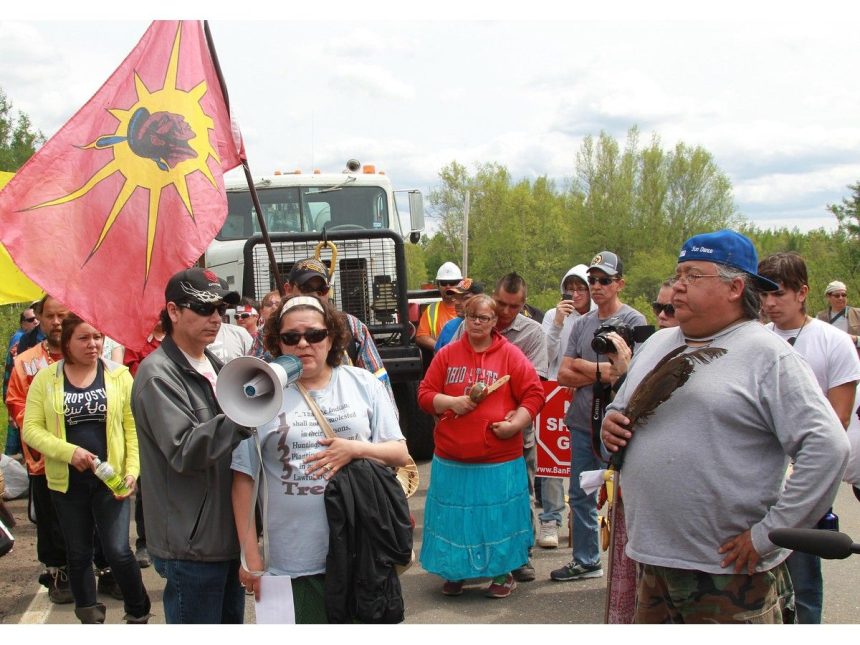
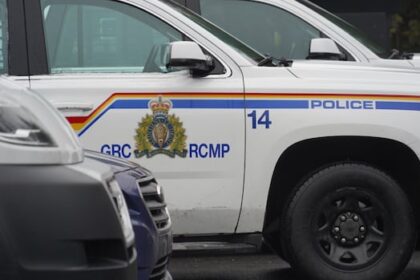
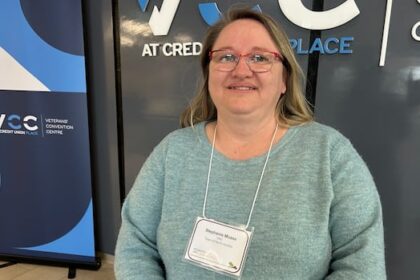
Closed-door meeting was held on exploiting the resource, which is still subject to a moratorium in the provinceAuthor of the article: John Chilibeck • Local Journalism Initiative reporterPublished Jun 25, 2026 • Last updated Jun 25, 2026 • 7 minute readShale gas protesters, many of them Indigenous, demonstrate on Route 126 north of Moncton between Birch Ridge and Harcourt in the early summer of 2013. BRUNSWICK NEWS ARCHIVEMore than a week after Premier Susan Holt held a closed-door meeting with New Brunswick’s First Nations chiefs, her Liberal government is still not saying anything about one of the main topics of discussion – the explosive issue of drilling for natural gas.THIS CONTENT IS RESERVED FOR SUBSCRIBERSSubscribe now to read the latest news in your city and across Canada.Unlimited online access to articles from across Canada with one account.Get exclusive access to the e-Edition, an electronic replica of the print edition that you can share, download and comment on.Enjoy insights and behind-the-scenes analysis from our award-winning journalists.Support local journalism and the next generation of journalists.SUBSCRIBE TO UNLOCK MORE ARTICLESSubscribe now to read the latest news in your city and across Canada.Unlimited online access to articles from across Canada with one account.Get exclusive access to the e-Edition, an electronic replica of the print edition that you can share, download and comment on.Enjoy insights and behind-the-scenes analysis from our award-winning journalists.Support local journalism and the next generation of journalists.REGISTER / SIGN IN TO UNLOCK MORE ARTICLESCreate an account or sign in to keep reading.Access articles from across Canada with one account.Enjoy additional articles per month.Get email updates from your favourite journalists.THIS ARTICLE IS FREE TO READ REGISTER TO UNLOCK.Create an account or sign in to continue with your reading experience.Access articles from across Canada with one accountShare your thoughts and join the conversation in the commentsEnjoy additional articles per monthGet email updates from your favourite authorsArticle contentBrunswick News has talked to several chiefs who confirmed that the idea of exploiting the resource was part of the talks, a sensitive issue in a province where pushback from opponents, including Indigenous demonstrators, led to a moratorium on fracking that has been in place for a dozen years.Allan Polchies, the chief of Sitansisk or St. Mary’s First Nation in Fredericton, said in an interview at a community event this week that natural gas was just one of several discussion points in the June 17 meeting with the premier.“Well, of course, everyone’s gonna have opinions on it. You know, definitely, we will have engagements with our citizens of our nation and have strong conversations about it. But, you know, that’s way, way down the road at this point.” Allan Polchies, chief of Sitansisk or St. Mary’s First Nation, says he’ll only agree to natural gas development if his community wants it. Photo by John Chilibeck/ Brunswick NewsPolchies said his First Nation council would hold wider discussions with the community on the issue in the future. Asked for his personal opinion on whether gas should be drilled, Polchies smiled.“I don’t decide for the people, the people decide for me,” he said. Then he made a joke. “You know I’m up for re-election in October, right?”Article contentThe idea of drilling for gas comes at a volatile time. The Liberal government is under pressure to fix its budget deficit, which at $1.4 billion is a record in the province, about one-tenth of its overall budget.Natural gas exploitation could potentially win the province tens of millions of dollars in royalties. Geologists think New Brunswick has an estimated 70 trillion cubic feet of the resource underground, mostly in the Frederick Brook shale between Sussex and Elgin, though there are other pockets north of Fredericton and Moncton.Prime Minister Mark Carney has tried to position Canada as an energy superpower and talked about natural gas as a transition fuel that emits fewer greenhouse gases than oil or coal would when burned. One of his key cabinet ministers, Dominic LeBlanc, recently said the Government of Canada would enthusiastically support the New Brunswick government if it chose to lift the province’s shale gas moratorium.At the same time, Holt has tried hard to improve relations between the provincial government and First Nations, building a lot of goodwill that former Progressive Conservative Premier Blaine Higgs, an ardent gas industry supporter, didn’t have.By signing up you consent to receive the above newsletter from Postmedia Network Inc.Article contentArticle contentBut there are still huge environmental concerns. Opponents say shale gas drilling would still contribute to dangerous greenhouse gases that warm the planet at an alarming rate, pollute the air and deplete fresh water in vast amounts. They also warn of the chemical cocktail in the wastewater left behind.More than a decade ago, hundreds of members from the province’s biggest First Nation, Elsipogtog, helped stop the American firm SWN Resources from doing exploratory work within what they consider their traditional territory near Rexton, not far from the eastern coast. RCMP officers are seen during a shale gas protest on June 7, 2013. BRUNSWICK NEWS ARCHIVEOn Oct. 17, 2013, ongoing protests over the work led to an RCMP raid on blockades and an encampment that quickly turned ugly. Several police cruisers were torched. Dozens of people, many of them Indigenous, were arrested. When the Liberal government of Brian Gallant took over in 2014, it quickly imposed a moratorium on new exploration and drilling, stating it couldn’t be lifted until five conditions were met.Article contentThey include getting social licence through community consultations, First Nations buy-in, clear and credible scientific information on the impacts of fracking on water, air, and public health, proper wastewater management, and proof of the economic benefit.Brunswick News asked spokespeople from the Department of Indigenous Affairs and the premier’s office about the meeting with the chiefs, and for the provincial government’s perspective on the talks about the possibility of developing natural gas.They acknowledged the request and then did not reply to several follow up messages. Holt is on vacation this week, but a request to interview Indigenous Affairs Minister Keith Chiasson was ignored.Former Liberal premier Frank McKenna, a huge supporter of natural gas development, told Brunswick News at a recent community event in Fredericton he could understand the Holt government’s delicate situation.Asked if he had discussed the issue with Holt, he laughed and said he’d talked to every premier since he left office in 1997 about the need to develop natural gas.Article contentMcKenna said the world had changed since the moratorium was introduced in 2014.“At a time when we’re running budget deficits of over a billion dollars a year, at a time when the entire country is trying to deal with this existential threat from south of the border, at a time where Europe desperately needs access to gas from sources other than Russia, I think it’s only natural that New Brunswick look at this issue and try to determine exactly how large your resource is. Because we may be fighting over nothing, or we may be fighting over something very substantial.” Former Liberal premier Frank McKenna says New Brunswick needs to figure out if its natural gas is commercially viable. Photo by John Chilibeck/ Brunswick NewsMcKenna, who sits on the board of Canadian Natural Resources Limited, one of the country’s largest independent crude oil and natural gas producers, said the Holt government would have to move step by step to try to lift the moratorium.“First of all, we need to create the social license to move, and the premier seems to be systematically working at that. I think we need to gather intelligence. By that, I mean, we need to assess the nature of the resource, and at some point, we would need to have geothermal work done, and seismic work could determine what the resource looks like. Until we know that, we’re fighting over nothing.Article content“We have no idea whether this is a commercial quantity of gas, or whether it can be lifted because of the engineering challenges. We don’t know that. I mean, there’s gas all over the world. But some of it just isn’t commercially viable. So, we need to determine all of that.”New Brunswick, he said, already has in place two large pieces of infrastructure that could make a project more viable – a natural gas pipeline and a liquefied natural gas, or LNG, terminal in Saint John that could be converted at great cost to export the product.Nor did McKenna think convincing the First Nations chiefs would be that difficult.“They just need to look around the world. In Western Canada and Alberta and British Columbia, First Nations are extremely involved in the ownership and exploitation of natural resources. And I think it would be very appropriate for those conversations to take place. New Brunswick as well should look at places like British Columbia, which is not known as a right-wing province, where the exploitation of natural gas is now a big part of their economy, and where they’re growing it to the point where we’ll probably have four or five LNG terminals on the coast.”Article contentHowever, some Indigenous people out west have also worked hard to stop oil and gas projects through legal challenges and blockades.The situation is no different in New Brunswick, where opinion is divided on First Nations over natural gas. Chief Terry Richardson of Pabineau First Nation has talked about the possibility of an ownership stake or winning royalties from gas, while other leaders have expressed concerns (he declined comment for this story).Earlier this year, Richardson arranged for the nine Mi’kmaq chiefs to hear a pitch from veteran oil and gas executive Jim Livingstone, who owns RC Energy in Alberta and says he has developed a cleaner method of drilling than fracking.Livingstone still hasn’t met with the six Wolastoqey chiefs, including Patricia Bernard.The chief of Madawaska First Nation in northwestern New Brunswick told Brunswick News she had to tread carefully on the issue.“I don’t even know how my community feels about it without actually reaching out and talking to my members about what, you know, what do they see in the future when it comes to natural gas,” she said in an interview.Article contentThe former Progressive Conservative government angered First Nations communities because Higgs tore up their shared tax agreements and instructed the Justice Department to fight the Wolastoqey’s big title claim for more than half of New Brunswick’s territory. The former premier also refused to hold a public inquiry into racism against Indigenous people in the justice system.His government’s pitch to the chiefs on natural gas, and how lucrative it could be to them, fell flat.Holt, on the other hand, has built a lot of goodwill with the chiefs. Since coming to power a little over a year and a half ago, her government has stopped challenging the title claim, drew up new shared tax agreements, and only last month, committed to holding an Indigenous-led public inquiry into systemic racism within the justice system.Bernard said so far, the chiefs were happy with the more collaborative approach. Whether that extends to developing natural gas remains to be seen.Article contentMadawaska is unique in that far more of its 623 members live outside the reserve in Edmundston than on it. And unlike most First Nations, she says the council controls the community’s membership list, not the federal government.Because hundreds of the members live so far away, the chief and council consult them by issuing surveys on a closed social media channel.She said her council in the near future would ask the members for their opinions on natural gas and a number of other energy topics. But they’re not in any kind of rush.Bernard described the two-hour meeting with the premier as introductory and pointed out that with so many chiefs taking turns to speak, there were no breakthroughs.“There’s nothing really concrete that came out of this. There will likely be more meetings, obviously, and there’s nothing really to say because we have to find out from our own communities and councils on where we stand.”Article content
First Nations chiefs, Liberals mum on sensitive topic of natural gas