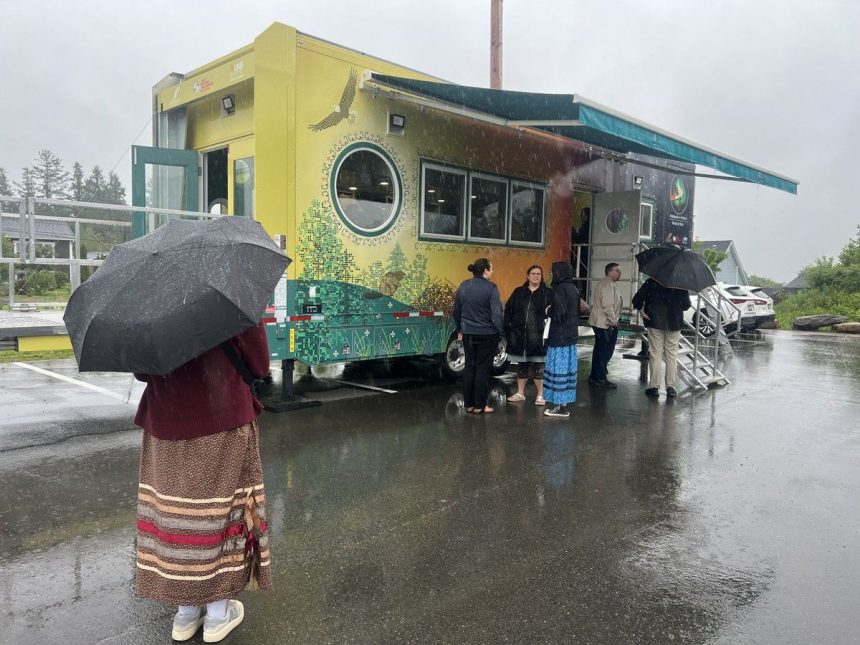
Nearly $6-million program to serve every First Nation in New Brunswick with moveable, advanced education on wheelsAuthor of the article: John Chilibeck • Local Journalism Initiative reporterPublished Jun 24, 2026 • Last updated Jun 24, 2026 • 3 minute readYoung Indigenous people in New Brunswick can now book a spot at a new mobile trailer that will include workshops on science, tech, engineering, arts and math. It’s parked in St. Mary’s First Nation in Fredericton but will soon travel the province. Photo by John Chilibeck/Brunswick NewsStanley Barnaby had a thought.THIS CONTENT IS RESERVED FOR SUBSCRIBERSSubscribe now to read the latest news in your city and across Canada.Unlimited online access to articles from across Canada with one account.Get exclusive access to the e-Edition, an electronic replica of the print edition that you can share, download and comment on.Enjoy insights and behind-the-scenes analysis from our award-winning journalists.Support local journalism and the next generation of journalists.SUBSCRIBE TO UNLOCK MORE ARTICLESSubscribe now to read the latest news in your city and across Canada.Unlimited online access to articles from across Canada with one account.Get exclusive access to the e-Edition, an electronic replica of the print edition that you can share, download and comment on.Enjoy insights and behind-the-scenes analysis from our award-winning journalists.Support local journalism and the next generation of journalists.REGISTER / SIGN IN TO UNLOCK MORE ARTICLESCreate an account or sign in to keep reading.Access articles from across Canada with one account.Enjoy additional articles per month.Get email updates from your favourite journalists.THIS ARTICLE IS FREE TO READ REGISTER TO UNLOCK.Create an account or sign in to continue with your reading experience.Access articles from across Canada with one accountShare your thoughts and join the conversation in the commentsEnjoy additional articles per monthGet email updates from your favourite authorsArticle contentIf young Indigenous people aren’t attending university in big numbers to learn about science, technology, engineering, arts or math, why not bring those important, advanced-level subjects to their communities, where they’re more comfortable?Three years and many funding partners since then, a new mobile trailer has been set up to do just that in those close-knit First Nations across New Brunswick.Branded Wabanaki in Motion NB: Roots to Stars, the idea is to get young Indigenous people hooked on subjects that they may never have considered. For instance, less than one per cent of engineers in Canada are Indigenous, even though they make up five per cent of the country’s population and are the fastest growing demographic.“Part of what we do too is we do a lot of youth engagement in the trades,” says Barnaby, the CEO of the Joint Economic Development Initiative, or JEDI, an Indigenous organization in Fredericton.“And we actually have a mobile trailer for that. So, I was like, well, why don’t we take that model and then build it into another opportunity, career path, education pathway, and bring that to our communities?”By signing up you consent to receive the above newsletter from Postmedia Network Inc.Article contentArticle content Abdur Chowdhury runs Roboflight, which teaches about robotics and drones. He was one of the participants in the mobile workshop for young Indigenous people. Photo by John Chilibeck/ Brunswick NewsBarnaby was one of several officials on hand Tuesday at the Maqiyahtimok Centre, which is in the heart of Sitansisk, or St. Mary’s First Nation. He credited the McKenna Institute at the University of New Brunswick for helping to bring the idea to life.They celebrated the launch of what they called the world’s first mobile space for Indigenous youth that’s equipped with a quantum machine, basically a computer that uses the principles of quantum physics to solve highly complex mathematical problems.The mobile, parked outside the community centre, is open for booking. Young Indigenous people up to the age of 35 can reserve their spot in a workshop that teaches one of the advanced subjects. Organizers are hoping at least 100 to 150 pass through in the first year. The trailer will also travel to the other Wolastoqey, Mi’kmaq and Passamaquoddy communities in the province.The big money for the program – $5.2 million – was mostly fronted by the Mastercard Foundation EleV Program, with another $750,000 contributed from TD Ready Challenge.Article content“I’m really excited to see the mobile maker space go into communities and inspire young people and careers that they might not have heard of,” said Ashley Albert, a lead with the Mastercard program and a member of the Chippewas of the Thames First Nation in southwestern Ontario.“There is a quantum unit in the mobile maker space and it’s one of like few in Canada. So, what an opportunity that the young people in New Brunswick will have to see that. It might open their eyes to careers outside like they’ve never heard of before.” Ashley Albert, a lead with the Mastercard Foundation EleV Program, says the workshops in the mobile trailer could inspire young people to take careers they’d never even heard of. Photo by John Chilibeck/ Brunswick NewsAlbert alluded to many First Nations still facing a housing and clean water crisis and said it would only make sense if more young Indigenous people become engineers to solve such problems.Frank McKenna, the former New Brunswick premier and namesake of the institute, joked that the project took longer than he wanted to cross the finish line.“The older I get, I often express my impatience with how long things take,” said the 78-year-old business executive and former ambassador to the U.S. “This one had the gestation period of a herd of elephants.” Former premier Frank McKenna says it’s important to bring educational opportunities to communities where Indigenous people live, making it a more comfortable environment. Photo by John Chilibeck/ Brunswick NewsBut he said the wait would be worth it if the program could inspire more young people to become scientists, engineers, designers and mathematicians.“Instead of bringing learners to classrooms, bring classrooms to learners. And that is what we’re doing here. We are dealing with a hard-to-service population with systemic barriers to learning, and the fastest growing demographic in the country. And we’re taking learning to them. Who knows what the results of all of that will be?”Article content
Opening Indigenous eyes to a career ‘they’ve never heard of before’