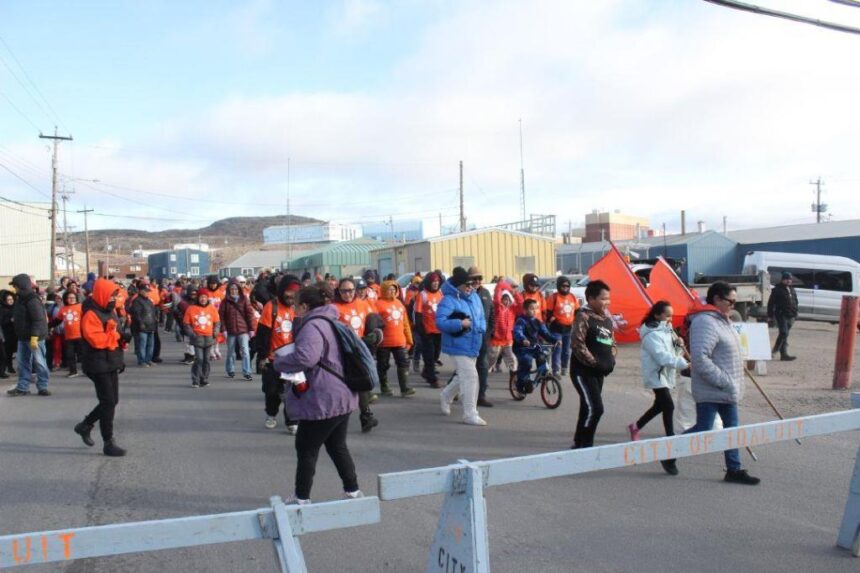
Published 8:39 am Wednesday, September 30, 2026 By William Koblensky Varela Local Journalism Initative Northern News Service Nunavut Tunngavik Inc. President Gloria Uluqsi and Premier John Main say that the National Day for Truth and Reconciliation on Sept. 30 is about reflecting on a painful past and building a better tomorrow. Uluqsi said it’s important to honour previous generations who protected Inuit languages, culture and identity, and those who fought for the rights Inuit have today. “I want every Nunavut Inuk, especially our young people, to know the rights our leaders fought to secure, to be proud of who they are and to believe in their power to shape the future of Nunavut,” said Uluqsi. While reflecting on the past is important, she said Inuit aren’t defined by the suffering they’ve gone through. “Our story is not only about what we endured. It is also about who we are, what we have achieved, and what we will build together,” she said. Main highlighted learning about residential schools as an important part of the day. One of the last residential schools to close in Canada was Kivalliq Hall in Rankin Inlet, which operated from 1985 to 1997. “Indigenous children were taken from their families and sent away against their will. This dark and hurtful part of Canadian history is remembered and observed annually for the surviving families and those that perished under the care of residential schools,” Main said. The premier said Nunavut must focus on uplifting families from the trauma that still exists from the assimilation program that ran from 1831 to 1997 in 140 schools. Across the country, 150,000 Indigenous children were sent to residential schools in an explicit effort to remove their language and culture, resulting in over 3,000 deaths, according to the Truth and Reconciliation Commission. “For all Canadians, Sept. 30 allows a time for reflection and remembrance about the many Inuit, First Nations and Metis families that endured this terrible hardship,” Main said. “It also helps create a chance to learn and become educated about the truth and history behind residential schools in our country.” Developing healthier and thriving communities should be informed by this history, he added. Main said he’ll spend Sept. 30 reflecting on this topic. “I plan to take the day to remember individuals and families who have been affected, as our government works towards a brighter future for all of Nunavummiut,” he said. Inuit Tapiriit Kanatami stated that reconciliation must be visible in outcomes for Inuit. The national Inuit organization unveiled the term Annirijavut two years ago, to mean “those we cherish and protect” in Inuktut. “It evokes the strong resolve contained within the phrase ‘every child matters’ and reflects the love we have for our children. Every year, we have rolled out new images created by Nooks Lindell of Arviat. More than 7,000 Inuit children attended residential school in Canada. ITK works to create a greater understanding of this legacy among Canadians,” the organization said.
Nunavut leaders say National Day for Truth and Reconciliation is about reflecting on the past and building the future