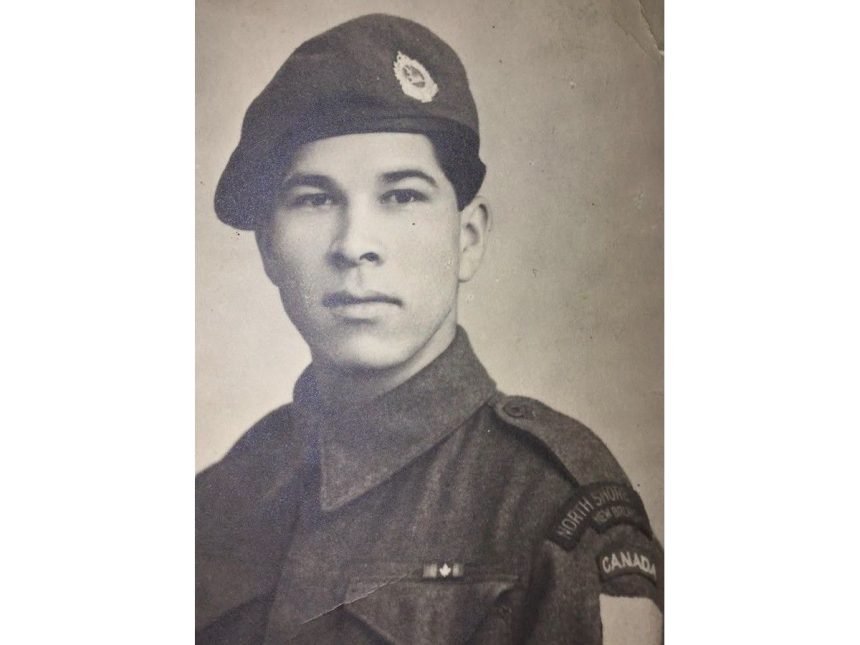
New Brunswick Indian Island chief was among soldiers who landed on Juno Beach on June 6, 1944Published Aug 10, 2026 • Last updated 1 hour ago • 2 minute readA street in Saint-Aubin-Sur-Mer, France, has been named for Peter J. Barlow, a First Nations chief from Indian Island who served with the North Shore (New Brunswick) Regiment during the Second World War. SUBMITTEDA street in Saint-Aubin-Sur-Mer, France, has been named for Peter J. Barlow, a First Nations chief from Indian Island who served with the North Shore (New Brunswick) Regiment during the Second World War.Saint-Aubin-Sur-Mer is a town on the coast of the English Channel on the eastern edge of Juno Beach, the Canadian sector during the Allied invasion of Normandy on June 6, 1944.The North Shore (New Brunswick) Regiment was among the first Canadian units to land on Juno Beach that day, with approximately 844 soldiers. According to historical records, 34 in regiment were killed and 90 wounded on the first day. Many of them were from the Miramichi and Bathurst region. A monument to the New Brunswick soldiers is located Saint-Aubin while the Juno Beach Centre museum is in nearby Courselles.Officials from the town and the regiment unveiled the sign marking Peter Barlow Lane on Aug. 1.The ceremony was part of the Saint-Aubin’s Acadian Week festivities, which included music and a museum exhibit celebrating Mi’kmaq soldiers who served with the North Shore (New Brunswick) Regiment. The town said in a news release that Barlow’s name was selected in recognition of the Canadian First Nations men who contributed to the liberation of Saint Aubin. The town said that by naming this cul-de-sac after Barlow, the municipality intends to permanently inscribe this memory in its landscape and pass this piece of history to future generations.According to a statement from Paolo Fongemie, honourary colonel of the North Shore (New Brunswick Regiment), Peter John Barlow was born in 1920 on the Mi’kmaq First Nation of Indian Island in Kent County. He grew up in a family of eight children and became chief when his father died in 1936.In May of 1940, Barlow enlisted with New Brunswick’s Carleton and York Regiment. While in England, he was transferred to the North Shore (New Brunswick) Regiment.“On the morning of D-Day, he landed near Saint-Aubin-sur-Mer with the mortar platoon commanded by Lt. Willard Parker,” Fongemie wrote. “His platoon helped neutralize German positions firing on the landing craft and the beach, and then participated in the advance that enabled the Regiment to liberate Tailleville. Peter Barlow continued fighting in Normandy, notably near the radar station south of Tailleville, at Carpiquet, and in the ruins of the Colombelles steelworks.”THIS CONTENT IS RESERVED FOR SUBSCRIBERSSubscribe now to read the latest news in your city and across Canada.Unlimited online access to articles from across Canada with one account.Get exclusive access to the e-Edition, an electronic replica of the print edition that you can share, download and comment on.Enjoy insights and behind-the-scenes analysis from our award-winning journalists.Support local journalism and the next generation of journalists.SUBSCRIBE TO UNLOCK MORE ARTICLESSubscribe now to read the latest news in your city and across Canada.Unlimited online access to articles from across Canada with one account.Get exclusive access to the e-Edition, an electronic replica of the print edition that you can share, download and comment on.Enjoy insights and behind-the-scenes analysis from our award-winning journalists.Support local journalism and the next generation of journalists.REGISTER / SIGN IN TO UNLOCK MORE ARTICLESCreate an account or sign in to keep reading.Access articles from across Canada with one account.Enjoy additional articles per month.Get email updates from your favourite journalists.THIS ARTICLE IS FREE TO READ REGISTER TO UNLOCK.Create an account or sign in to continue with your reading experience.Access articles from across Canada with one accountShare your thoughts and join the conversation in the commentsEnjoy additional articles per monthGet email updates from your favourite authorsArticle contentBarlow continued to serve with the regiment as it moved north to the Scheldt, Rhineland and the Netherlands, and suffered hearing loss from constant exposure to mortar fire, and trench foot from wet conditions. Peter J. Barlow of Indian Island served with the North Shore (New Brunswick) Regiment during the Second World War and returned home to become grand chief of New Brunswick. SUBMITTEDReturning home, Barlow resumed his duties as Chief of the Indian Island First Nation while also working as a fisherman and farmer. He was one of the founding chiefs of the Union of New Brunswick Indians to defend territorial fishing and forestry rights. He served as chief of Indian Island for 49 years and was given the honourary title of Grand Chief of the Chiefs of New Brunswick. He died in 2000.Article content
Street in France named in honour of Indigenous N.B. soldier