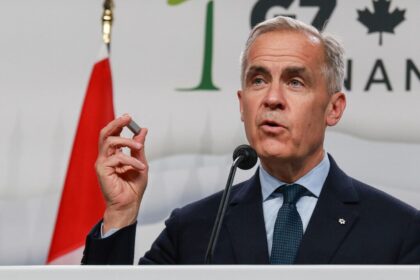
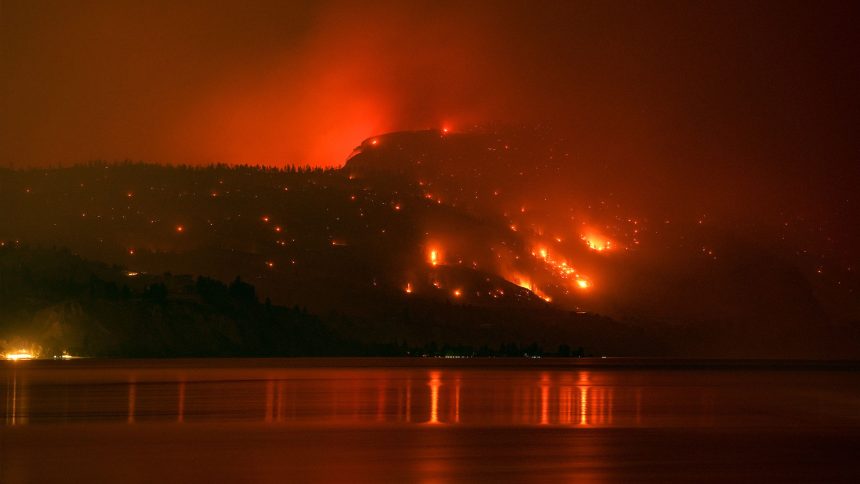
The Canadian Armed Forces are on standby to help the wildfire situation that deteriorated rapidly over the weekend in British Columbia’s Okanagan region, where one person has died, thousands have been evacuated and there’s been extensive property destruction. Defence Minister David McGuinty said B.C. sent a request for assistance to Emergency Management Minister Eleanor Olszewski over the weekend, and she approved federal help with shelter and accommodation. McGuinty said on Monday that while the province had not formally asked for military help, the Canadian Armed Forces were in “direct, constant contact” with the B.C. government and Ottawa. He said the military was ready the moment it received a formal request to act, and the situation was being assessed “hour by hour.” Areas around Okanagan Lake were devastated by the Bald Range wildfire that roared into the outskirts of Summerland on the lake’s western shore on Saturday, forcing 20,000 residents to flee, and it continues to burn out of control. RCMP said late Sunday that an 80-year-old woman died as she tried to escape her home in Meadow Valley, west of Summerland. Prime Minister Mark Carney issued his condolences about the death in a social media statement on Monday, calling the news “heartbreaking.” “My thoughts are with her family, loved ones, and everyone in her community,” he said. “Our government will continue to support British Columbia and everyone affected by this summer’s wildfires in the days and weeks ahead.” A B.C. Forests Ministry spokesperson said firefighting costs had not yet been tallied. The British Columbia government on Saturday declared a provincial state of emergency and said property losses were significant, but details are scant. Information about the destruction has trickled out via social media, with video posted online showing the community of Faulder had been largely incinerated. Kyla Gaudiuso said she found out her house in Faulder had been destroyed when she received a photo of the ridge where it once stood, completely engulfed in flames. Gaudiuso said Sunday that she had not received official confirmation, but the photo left her certain her home was gone, where the village of around 215 residents was reduced to smouldering ruins. Gaudiuso described the chaotic scene that unfolded as residents learned of the encroaching fire and the community began to evacuate, calling it “pandemonium.” She said she was able to get to safety and was staying at a friend’s house in Penticton, but hoped the blaze was contained so she could see the destruction for herself. “I would love to just see like a picture or know for sure like what’s left on our property because I’m kind of one of those people, it doesn’t really seem real,” Gaudiuso said in an interview. “I have to see it to believe it.” An update from the BC Wildfire Service on Monday said the fire had grown to about 156 square kilometres, compared with 136 square kilometres the day before. The service said clearer conditions were expected Monday and with direct sun could contribute to increased fire behaviour. “Crews are also mopping up previously burned areas to reduce the potential for reburns,” it said. Hier soir, j’ai approuvé une demande d’aide fédérale de la Colombie-Britannique visant à fournir des abris et des hébergements aux personnes qui ont été contraintes de quitter leur domicile en raison des feux de forêt qui ravagent la province, en particulier celles de la région… — Eleanor Olszewski (Ol-SHEV-skee) 🇨🇦 (@EleanorO_MP) August 9, 2026 About 10,000 homes are under evacuation order in Summerland, Peachland, the regional districts of Okanagan-Similkameen and Central Okanagan, and on Penticton Indian Band lands. More than 3,200 homes are subject to lower-level evacuation alerts that stretch north past Peachland to Highway 97C, and south past Penticton along the city’s western outskirts. In the Cariboo, there was progress on the massive Pear Lake fire, about 10 times the size of the Summerland fire at 1,468 square kilometres. The wildfire service said humidity increased and temperatures were down and thunderstorms were in the forecast, with rain expected. It said the fire was expected to be less active and the blaze was fuel-driven rather than pushed by the wind. “After a week of hot, dry weather, fuels are highly receptive and the fire continues to spread outward wherever there is fuel to carry it.” The Thompson-Nicola Regional District downgraded evacuation orders to alerts for the communities of south Green Lake, 70 Mile House and Hutchinson Lake, moving those in more than 670 properties to an evacuation alert. This report by The Canadian Press was first published Aug. 10, 2026. Story by Brenna Owen, with files by Brieanna Charlebois and Chuck Chiang in Vancouver and Wolfgang Depner in Victoria Continue Reading
Canadian military on standby to help as B.C. wildfire losses mount and thousands flee


Leave a Comment