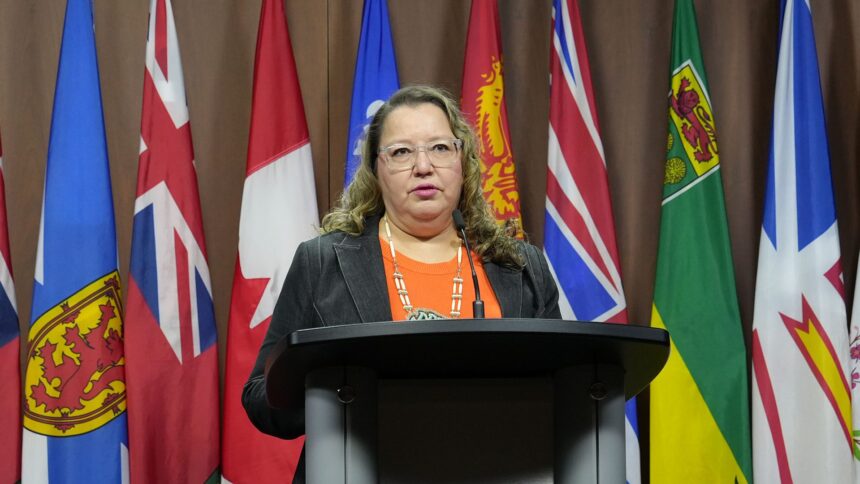
The national chief of the Assembly of First Nations says the Carney government’s proposed Bill C-37 falls short when it comes to the necessary health, legal and environmental protections to ensure access to clean drinking water. “Clean drinking water is a human right that has been denied for generations of First Nations families across Canada,” Cindy Woodhouse Nepinak said in a press release. “Sadly, with Bill C-37, the federal government is still refusing to recognize the human right to water for First Nations in Canada.” Woodhouse Nepinak was a witness before the Indigenous and Northern Affairs Committee on Tuesday, which is studying the proposed legislation. The AFN says Bill C-37, also known as the First Nations Clean Water Act, is significantly weaker than legislation drafted by the previous Trudeau government. Bill C-61, which did not pass because Parliament was prorogued under former prime minister Justin Trudeau, recognized First Nations access to clean drinking water as a human right, but has been weakened under the current legislation to the “progressive realization.” It took Carney more than a year to reintroduce the new legislation. According to the United Nations, progressive realization means that states “have a duty to respect, protect and fulfil economic, social and cultural rights,” and are “required to progressively achieve the full realization of these rights over a period of time. Regardless of resource availability, States have an immediate obligation to take appropriate steps to ensure continuous and sustained improvement in the enjoyment of these rights over time.” The AFN also says the proposed legislation gives provinces a veto, lacks adequate protections for source water and doesn’t live up to Canada’s United Nations Declaration on the Rights of Indigenous Peoples commitments. “We are calling on Parliament to take the time needed to work with First Nations on required improvements, clarifications and amendments to Bill C-37 that respect our rights and jurisdiction,” Woodhouse Nepinak said. Bill C-37 has passed second reading in the House of Commons and is currently in committee. The previous water legislation was drafted in response to a lawsuit that was settled in 2021. That bill also included an option for source water protection but failed to pass before Parliament was dissolved for the 2025 election. The new bill is backed by $4.6 billion in funding over five years, which the federal government describes as the single largest commitment ever made to First Nations water protection. Indigenous Services Minister Mandy Gull-Masty has said the new legislation was written to “stand the test of time” and insists it does not weaken the protections in the previous bill. Fraser NeedhamReporter | OttawaFraser spent the last 20 years working in both print and radio in Saskatchewan – mostly in the northern part of the province. Before joining APTN’s Ottawa bureau, he was news director for the Missinipi Broadcasting Corporation working out of their Prince Albert office. He holds a bachelor of arts degree in political science from Carleton University and a diploma of journalism from Algonquin College. Continue Reading
AFN calls for strengthening of First Nations Clean Water Act


Leave a Comment