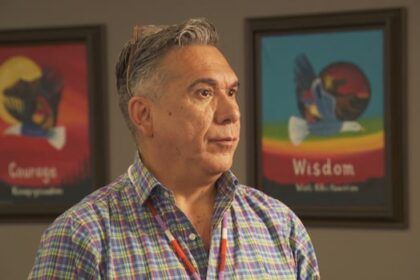
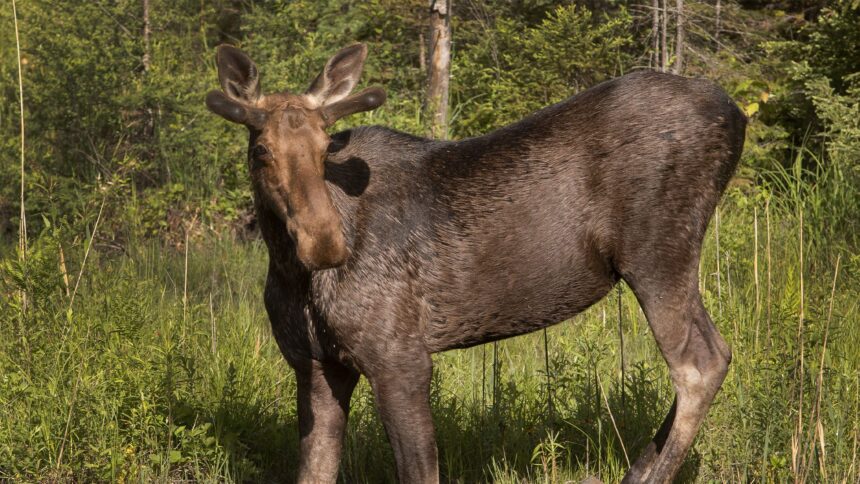
A First Nation in northern Manitoba is taking the province back to court over its handling of big game licenses, claiming it infringes on Treaty rights and prior hunting agreements. Leadership at Pimicikamak First Nation, also known as Cross Lake, claims its members should, but do not have, priority when it comes to hunting the dwindling population of moose on its traditional territory. This is after a judge “misapprehended” a request for judicial review on Manitoba’s handling of moose hunting in 2024, according to court documents. And while the matter is not settled, the community is also calling upon hunters to hand their licenses back for the rest of the 2026-2027 season to give the animals a chance to recover. Pimicikamak, located approximately 520 kilometres north of Winnipeg, sits in the boreal forest and consists of approximately 10,400 hectares of land. It’s part of Game-Hunting Area (GHA) 9A, which, according to Manitoba’s most recent air survey results collected in 2025, only has an estimated tally of 599 moose over 35,608 square kilometers. According to the Manitoba Wildlife Federation (MWF), the area’s bull moose population has declined by 53 per cent over the last decade. Chief David Monias said climate change and the increasing threat of wildfires are making the moose disappear. He said that last year, wildfires burnt approximately 168,000 hectares of forest on the Nation’s territory alone. “The territory has suffered tremendous environmental damages,” he said. “And we have a responsibility to protect that land and wildlife … to protect that land and wildlife for our people, for future generations.” He added that Manitoba also has a responsibility to honour the inherent Treaty right to hunt, and to the Northern Flood Agreement, established in 1977, which was in response to the negative impacts on several First Nations from the construction of a Hydro dam. According to the agreement, “residents of the Reserves [were granted] first priority to all the wildlife resources within their Trapline Zones, and in the rivers and lakes which were traditionally available to and used by them as a source of food supply, income-in-kind and income.” It also states that, unless there is an overabundance of a certain animal, non-Indigenous hunters are prohibited from hunting in the area at all. In the case of an overabundance, the province must only give out licenses after “meaningful consultation with the appropriate representatives or body representing the interests of the residents affected.” However, according to Monias, this is not the case and licensed hunters are still allowed to hunt moose in regional trapline zones and areas for First Nations peoples without prior consultation. Monias pictured at the AFN gathering in 2025. Photo: Mark Blackburn/APTN. Right infringement ‘misunderstood’: Chief, court documents The matter was originally brought to court in 2024. That year, Manitoba granted 88 licenses to hunters for use in Pimicikamak’s territory, according to court documents. Before 2024, 400 big game hunting licenses were distributed through its moose lottery annually, but it was cut down to 100 to account for the declining population. Pimicikamak argued that this was done without consultation and infringes on the agreement made in 1977. In 2022, it had already requested that licensed moose hunting cease in the area, as the depleting number of licenses “confirms that there is not an ‘overabundance of the species’ in the region,” and therefore prohibits the hunting from happening, according to the agreement. The court matter, however, was dismissed in October 2025, when the judge concluded that the subject of Treaty rights must be done through a civil lawsuit. The MWF also brought the matter to court, stating that the cut to licenses was unjustified, but was also dismissed. The organization has also appealed. Monias told APTN that the application was “misunderstood.” “We are appealing to make sure that we have the first priority, as Treaty 5. We also have the Northern Flood Agreement that … clearly states in black and white that, when there’s a decline of the moose population, that we have a priority over those hunting areas,” he said. “And that’s the problem. They’re not following their own agreement and they’re not following their own Treaty.” According to the factum, the facts of the matter are clear — “existing moose populations cannot satisfy Pimicikamak’s growing needs”, and “Pimicikamak’s concerns in meeting their food needs and declines in the moose population are legitimately held, and moose populations in GHAs 9A and 10 are scarce.” Pimicikamak and its legal defense claimed that the judge “committed palpable and overriding errors” by “failing to conduct even a cursory analysis” of the rule and whether this case fell within the scope, as well as “mischaracterizing the application as a claim based on asserted, unproven Aboriginal and Treaty rights instead of an established Treaty right,” on paper. It argued that there is no need to prove a Treaty right through a statement of claim the same way one would approach a civil lawsuit, which was an error on the judge’s part, according to the defense. This year, 124 moose hunting licenses were assigned through the province’s annual draw. While the matter is still before the court, Monias is asking that non-Indigenous hunters voluntarily hand back their big game licenses for the 2026-2027 season. “Our concern is not with the individual licensed hunters,” he said. “Basically, hunters should not be placed in the middle of a dispute between Manitoba and the rights-holding Nation. “We are counting on the goodness of the hunters’ hearts and their minds to say, listen, Manitoba gave us these licenses when they’re not supposed to be issuing these licenses. Can you please return them? So we are counting on them to do that on their own, voluntarily,” he said. A matter of rights, ‘common sense’ Pimicikamak is not the only Nation asking for a voluntary halt. On Sept. 18, Misipawistik Cree Nation Chief Heidi Cook announced that it was requesting that licensed hunters, as well as its members do not hunt moose in GHA 10. Aerial survey results from 2025 counted only 281 individual moose in the area in 2025. In a statement, Bloodvein River First Nation also asserted that no one is permitted to hunt moose on its traditional territory without a permit from band council, the Canadian Press reported. The community has a checkpost, which has been turning licensed hunters away. This issue was also brought to court by the MWF in 2025 and ended with an agreement that the stop would only be used for safety reasons. However, the community began to bar hunters again this year. Bloodvein Chief Lisa Young stated that she was “tired of hearing lip service to reconciliation while our rights get trampled. “All Bloodvein is asking for is what Manitoba already knows we are legally entitled to: meaningful consultation to achieve our consent on decisions that directly affect our community and rights.” Manitoba Premier Wab Kinew countered the checkstop approach, recommending instead that communities, hunters and the wildlife federation work together. “What I would say to folks who in Bloodvein are supporting this checkstop, this is not the way to do it,” Kinew said. “If you’re causing division between Indigenous and non-Indigenous and not letting non-Indigenous people participate in the sharing of the land, that’s not right either.” Manitoba Premier Wab Kinew pictured in 2025. Photo: Mark Blackburn/APTN. When asked about his reaction to the debate around moose stewardship in Manitoba, Monias said that “common sense gets lost in the whole scenario of bureaucracy. “The common sense of, well, what happened to the moose in the fire? … There was a decline of moose population in the first place. Does that mean they’re grossly declining even more now?” he continued. “We are looking at [Manitoba]’s common sense to look at, morally, is this the right thing to do? Issue licenses when we know that the people in the north were evacuated, affected by forest fires. And it’s not only the people, it’s the animals, the wildlife that were affected. Because that was their home. That was their home that burned.” With Files from the Canadian Press Tags: Bloodvein River First Nation, David Monias, Heidi Cook, Hunting, Lisa Young, Manitoba, Misipawistik Cree Nation, moose stewardship, Pimicikamak Cree Nation, Treaty 5, Wab Kinew Continue Reading
Manitobas handling of moose hunting an infringement on Treaty rights: court documents



Leave a Comment