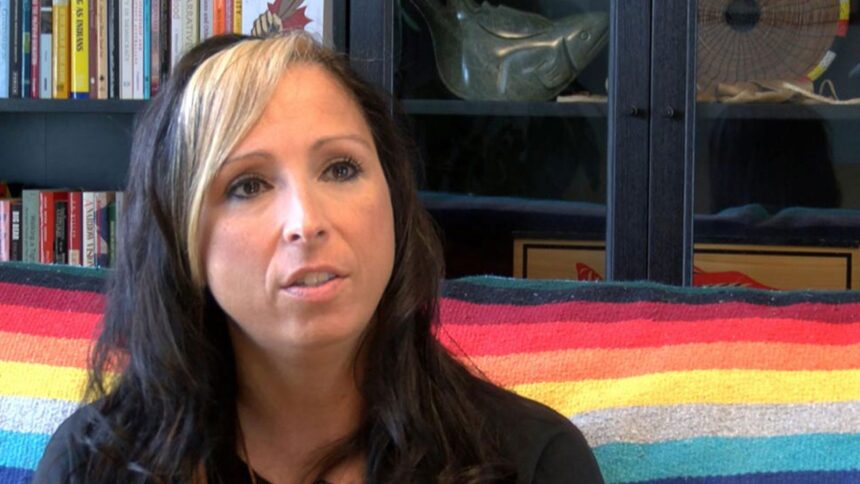
Nine months after the Senate voted unanimously to end the second-generation cut-off, the federal government must now decide what to do with Bill S-2. The government bill was introduced in the Senate, where senators added an amendment the government wasn’t expecting and doesn’t want. The amendment would force Ottawa to scrap the second-generation cut-off and replace it with a one-parent rule. Pam Palmater, Mi’kmaw lawyer and chair in Indigenous governance at Toronto Metropolitan University, has testified on a number of occasions at federal committees on the issue. “Every single First Nation person is affected by Bill C-31 and the second-generation cut-off,” Palmater told APTN News. Bill C-31, passed in 1985, split people registered under the Indian Act into two legal classes. A person under section 6(1) of the law can pass status to a child no matter who the other parent is. But a person under section 6(2) — “one parent” status — can pass it on only if the other parent is also registered as “status” under the Indian Act. After two generations of parenting with someone who is not registered, the third generation is out. That is the second-generation cut-off. Indigenous Services Canada (ISC) Minister Mandy Gull-Masty told APTN’s Dennis Ward in an upcoming episode of Face to Face that the government spent the summer consulting on the amendment, but wouldn’t say what will happen next. “The second generation cut-off consultation process concluded in July. So I was very happy that this work was able to be completed,” she said. “It is very clear that there are some nations that want a one-parent rule. The consultations also demonstrated that there are nations out there that feel very strongly that they need to be the ones who determine the criteria for what it means to be a citizen of their nation. “I have the unique challenge as a minister to ensure the pathway for those nations who want to have the one-parent rule, and a pathway for those who don’t. Whatever the final decision is, I’m reflecting everybody’s voice who is at the table. “I do hear those First Nations communities who really want the one-parent rule. We also have to have the conversation with those groups who do not wish to pursue that pathway. [There’s] more work to be done,” she said. ISC Minister Mandy Gull-Masty at the 2025 AFN assembly in Ottawa. Sharon McIvor, who put forward a petition to have S-2 passed with the second-generation cutoff amendment, is on the far left. Photo: Karyn Pugliese/APTN. ‘She’s conflating issues’ Gull-Masty has said the government will not adopt the Senate amendments without more time. Status, she argued, has to be handled alongside First Nations control of membership and the high voting thresholds in section 10 of the Act. “The question is not how we will do it, but when we will do it,” she told the House of Commons in February. Palmater said that argument conflates three separate legal issues; status, band membership, and self-government citizenship “With all due respect to ISC Minister Mandy Gull-Masty, she’s conflating issues which serves to confuse people,” she said. “You [Gull-Masty] are not being directly honest with the public, with MPs, with First Nations about what the issue is. It’s about discrimination in Indian status and the federal government has control over that.” “As long as Canada decides who an Indian is, they can’t discriminate,” she said. Sen. Paul Prosper chaired the Senate committee hearing evidence on S-2. Prosper said the consultation file amongst First Nations is already long enough. “There has been extensive consultation. The second-generation cut-off was introduced back in 1985 and since then there have been a number of studies that look at the second-generation cut-off. Time and time again, First Nations have said, we do not want the second-generation cut-off. There is a long record of consultation all pointing to getting rid of the second-generation cut-off.” “Emphasis should be getting rid of discrimination now within the Indian Act,” Prosper said. “There has been extensive support shown by First Nations across this country. Over 500 First Nations support the Senate’s amended Bill S-2. It’s important for the government to do what’s right and acknowledge the perspectives of First Nations people, the vast majority of which support the amended bill.” This figure is compiled by the End-the Cut-Off campaign, which has been collecting band-council resolutions and letters of support for a one-parent rule. End-the-Cut-Off is a coalition of First Nations women, lawyers and advocates pressing the House to pass the Senate amendments. A House of Commons petition started by Sharon McIvor, collected 14,298 validated signatures before it closed in April and was sponsored by Liberal MP Lori Idlout, who tabled the petition before crossing the floor from the NDP to the government side. That petition insinuates that the second-generation cut-off are Indian Act rules that continue sex-and race-based discrimination, divide families, lead to the legal extinction of status Indians. The government’s written response, tabled Aug. 19, promised more work — not a date. “The government recognizes that there is still more work to do and intends to follow through on its commitment to address the second-generation cut-off.” Sen. Paul Prosper at a news conference in Ottawa on June 11, 2026. Prosper is asking the government to accept an amendment to Bill S-2 to end the second generation cutoff. Photo: Mark Blackburn/APTN. The B.C.Civil Liberties Association called further delay “unconscionable.” Policy counsel Aislin Jackson said Canada has spent 75 years writing eligibility rules “so that the recognized population will shrink and, eventually, disappear,” with the harm falling “mainly on women and their descendants.” The Ontario Native Women’s Association (ONWA) — which calls itself the oldest and largest Indigenous women’s organization in Canada — tied the cut-off to the MMIWG crisis. “Ending legislated sex discrimination in [the] Indian Act & 2nd-generation cut-off policy is key to addressing the ongoing violence against Indigenous women & [the] #MMIWG epidemic,” ONWA posted, pointing people to endthecutoff.ca. ONWA CEO Cora McGuire-Cyrette told the Senate last fall that keeping the cut-off “will result in the numbers of registered Indians declining over time, eventually leading to the extinction of status Indians and entire communities.” Ottawa tabled S-2 to comply with Nicholas v. Canada, the B.C. Supreme Court ruling that stated the Act still punished the wives and children of men who were enfranchised. Read More: Liberals running out of time on proposed law to remove one kind of discrimination from Indian Act ‘It’s really, really serious’: ISC minister grilled by Senate committee on second-generation cut off in Indian Act Palmater called Nicholas “one of the most interesting cases there’s ever been.” In that case Canada conceded that enfranchisement provisions, which kept some people from being registered or from passing status on, unjustifiably discriminated on the basis of race or ethnic origin under section 15 of the Charter. Palmater said it is “the only Indian-status case where they have done that.” “Canada — the Liberal government — said don’t worry, we’re not going to litigate this, let’s put this in abeyance,” Palmater said. Witnesses who had already spent decades in court told senators that another piecemeal patch would leave the cut-off intact. Senators agreed. “Bill S-2 as amended by the Senate reflects all of the amendments that the vast majority of First Nations and First Nations women asked for,” Palmater said. One fear following the amended bill is that a one-parent rule would open the register. Palmater said that reading is looking forward. “There are a lot of people that have a lot of fears of pretendians,” she said. “People are worried that this Bill S-2, as it was amended by the Senate, is just going to open the doors and pretendians will flood in. But what it does, actually, is close the door permanently to pretendians. It acts as a barrier to pretendians permanently.” She said the Senate amendments keep entitlement tied to a parent who is already entitled under the Act—they don’t invent a new, ancestry-only on-ramp for people with no-status parents. S-2 remains before the House Standing Committee on Indigenous and Northern Affairs, which last considered it on May 28. It has not been reported back to the House. Continue Reading
Mikmaw lawyer says Ottawa is stalling on ending second-generation cut-off



Leave a Comment